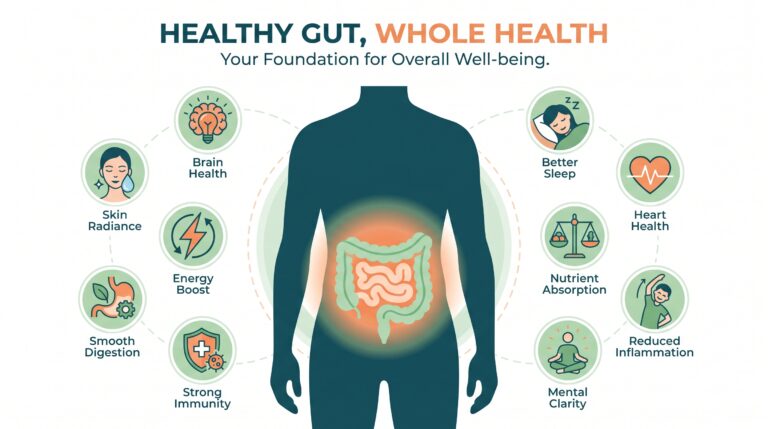
Gut Health and Anxiety: What the Science Actually Shows
Have you ever noticed how anxiety physically feels in your body? Long before your brain even registers that you’re nervous about a looming deadline, a difficult conversation, or a stressful life event, your stomach is already tied in knots. You get “butterflies.” Your digestion speeds up uncomfortably, or it completely shuts down, leaving you bloated and heavy.
For decades, conventional medicine treated this biological response as a strict one-way street: your brain gets anxious, and your stomach simply reacts to the stress.
But over the last few years, a massive and exciting shift has happened in clinical research. We now know that the communication between your mind and your digestion is a two-way street. And surprisingly, the vast majority of the traffic is actually flowing from your gut to your brain.
If you are struggling with daily anxiety, persistent brain fog, or an overwhelming sense of stress, looking at your digestion might be one of the most effective, science-backed steps you can take. Let’s break down exactly what the research shows about the link between gut health and anxiety, minus the confusing medical jargon, and look at how you can use food to find some calm.
The Vicious Cycle: Stress, Cortisol, and Your Microbiome
Before we look at how to fix the problem, we need to understand how the cycle starts.
When you experience stress—whether it’s a real physical threat or just an overflowing email inbox—your body activates the HPA axis (Hypothalamic-Pituitary-Adrenal axis), flooding your system with cortisol and adrenaline. This is your “fight or flight” response.
In this state, your body pulls blood and energy away from your digestive tract to send it to your muscles. Digestion effectively pauses. If this happens occasionally, it’s fine. But in our modern world, many of us are in a state of chronic, low-grade stress.
Chronically high cortisol actively changes the environment of your gut. It reduces stomach acid, slows down motility, and creates a hostile environment for your beneficial gut bacteria. The “good” bugs die off, and the opportunistic, stress-resilient “bad” bugs multiply. This state of imbalance is called dysbiosis.
And here is the catch: once your microbiome is in a state of dysbiosis, it starts sending its own stress signals back to your brain, creating a vicious cycle of anxiety that feeds itself.
The Vagus Nerve: The Highway of Anxiety
To understand how your stomach can make you anxious, you first need to understand the physical connection between the two organs.
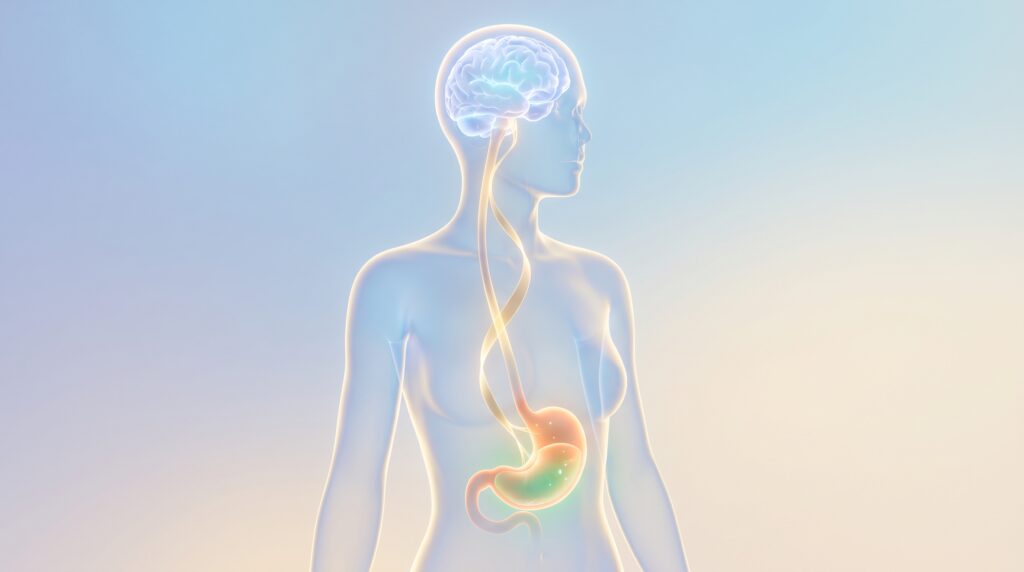
Your gut and brain are tethered together by the vagus nerve, a massive network of millions of nerve fibers extending from your brainstem down to your abdomen. It acts as an information highway. When your gut microbiome is balanced and healthy, it sends signals of safety and calm up the vagus nerve to the brain.
But when your gut is inflamed, it sends alarm signals up that same highway. Your brain interprets these physical alarm bells as emotional anxiety and panic.
(If you want to understand the fascinating, detailed mechanics of this communication highway, I highly recommend reading our complete guide on the Gut-Brain Connection).
Your Gut Makes Your “Happy” Chemicals
This is the piece of science that usually shocks people the most.
When we talk about anxiety and depression, we usually talk about neurotransmitters like serotonin (which regulates mood, sleep, and happiness), dopamine (the motivation and reward chemical), and GABA (which induces calmness and relaxation). For years, we assumed these were manufactured almost exclusively in the brain.
The reality?
- Over 90% of your body’s serotonin is produced in the digestive tract by specialized cells, and this production is directly regulated by your gut bacteria.
- About 50% of your body’s dopamine is made in the gut.
- Specific strains of gut bacteria (like Lactobacillus and Bifidobacterium) actively synthesize GABA.
When your gut microbiome is depleted by a poor diet, antibiotics, or chronic stress, your body literally lacks the biological workforce required to produce the chemicals that keep you feeling calm and emotionally resilient.
Leaky Gut and Neuroinflammation
When you have a healthy gut, the lining of your intestines acts like a tight security gate. It lets nutrients into your bloodstream and keeps toxins, undigested food particles, and harmful bacteria out.
However, a diet high in ultra-processed foods, excess alcohol, and chronic stress can loosen these gates—a condition scientifically known as intestinal permeability (commonly called “leaky gut”). When this happens, toxic byproducts from bad bacteria (called lipopolysaccharides, or LPS) leak into your bloodstream.
Your immune system spots these invaders and attacks them, causing systemic inflammation. Here is where anxiety comes in: inflammation in the body directly translates to inflammation in the brain.
Studies published in leading psychiatric journals have consistently linked neuroinflammation to heightened anxiety, severe depression, and brain fog. By healing the gut lining, you effectively lower the systemic inflammation that keeps your nervous system trapped in a constant state of panic.
5 Actionable Steps to Eat for a Calmer Mind
You cannot out-meditate a diet that is actively inflaming your nervous system. If you want to support your mental health through your microbiome, here is a 5-step protocol based on current clinical research:
1. Feed the Good Bacteria (Prioritize Fiber)
Your beneficial gut bacteria need food to survive and produce serotonin. Their absolute favorite food is prebiotic fiber. When they ferment this fiber, they produce short-chain fatty acids (like butyrate) that strengthen the gut lining and lower brain inflammation.
If you want to strategically increase your fiber intake to heal your microbiome, you need to understand how to prioritize it correctly. (Check out our deep dive on Fibermaxxing and Gut Health to see exactly which 8 foods you should be eating daily).
2. Include Polyphenols Daily
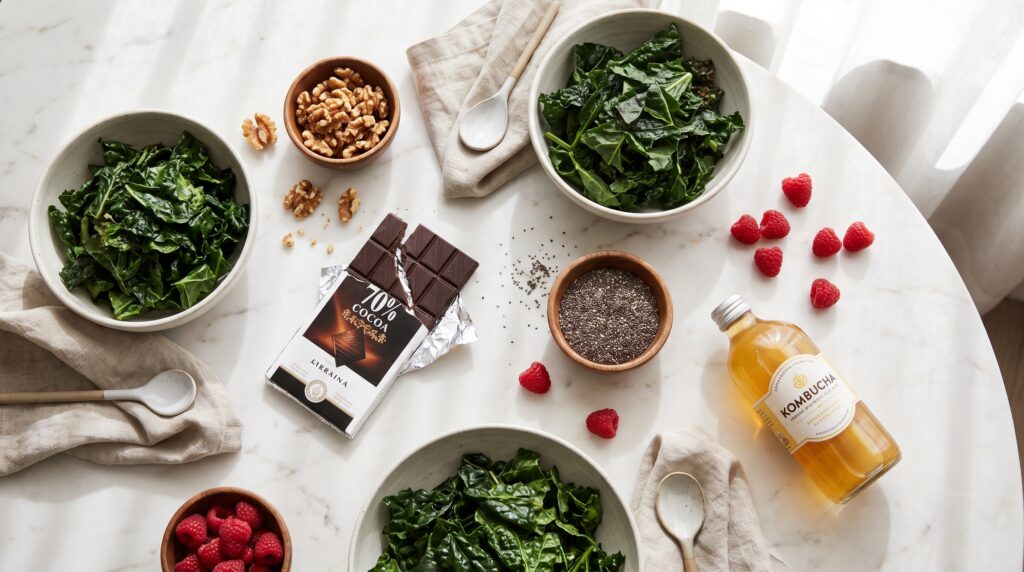
Polyphenols are plant compounds that act as antioxidants for your brain and targeted fuel for your gut. Berries, dark chocolate (70% cacao or higher), green tea, pecans, and extra virgin olive oil are packed with them. They have been shown to selectively feed the specific bacteria most associated with lowered anxiety and improved cognitive function.
3. Introduce Fermented Foods
A landmark study by researchers at Stanford University found that a diet high in fermented foods (like kefir, kimchi, raw sauerkraut, and kombucha) significantly increased microbiome diversity and drastically decreased markers of systemic inflammation in just 10 weeks. Start slow—just one or two tablespoons a day—to let your system adjust.
4. Activate “Rest and Digest” Before Meals

You can eat the healthiest meal in the world, but if you eat it while stressed out, hunched over your laptop, or scrolling through stressful news, your body won’t absorb the nutrients properly. Before you take your first bite, take three deep, slow breaths. This simple act stimulates the vagus nerve, pulling your body out of “fight or flight” and into the “rest and digest” (parasympathetic) state.
5. Protect Your Circadian Rhythm
Your gut bacteria have their own sleep-wake cycles. Eating late at night disrupts this rhythm, leading to poorer digestion and a less resilient microbiome. Try to close your eating window at least three hours before bed. This gives your gut time to perform its essential “housekeeping” sweeps while you sleep, reducing morning bloating and morning anxiety.
Frequently Asked Questions
Q: Can fixing my gut cure my anxiety completely? A: Anxiety is incredibly complex, and there is no single “cure-all.” Your mental health is influenced by genetics, trauma, environment, and lifestyle. However, treating anxiety while ignoring your gut health is like trying to put out a fire while someone else is pouring gasoline on it. Improving your gut health removes a major biological stressor, making your mind much more resilient and responsive to other therapies.
Q: How long does it take to see mental health benefits from improving gut health? A: Your gut microbiome can begin to change in as little as 3 to 5 days after altering your diet. However, for meaningful reductions in systemic inflammation and improvements in mood, research suggests consistent dietary changes require about 4 to 12 weeks to reflect in your mental well-being.
Q: What are the worst foods for gut-related anxiety? A: Ultra-processed foods, refined sugars, artificial sweeteners, and excessive alcohol are the primary culprits. They feed inflammatory bacteria, degrade the gut lining, and cause massive blood sugar spikes and crashes, which mimic the physical symptoms of a panic attack.
The Bottom Line
We are finally stepping into an era of medicine where we realize that mental health isn’t just in our heads—it’s in our entire bodies.
By taking small, consistent steps to rebuild your microbiome, you are giving your body the biological tools it needs to feel safe, calm, and grounded. Start with one change today. Add an extra serving of vegetables to your dinner, or take a moment to breathe before you eat. Your gut—and your mind—will thank you.
References & Clinical Evidence
- Cryan, J. F., et al. (2019). The Microbiota-Gut-Brain Axis. Physiological Reviews.
- Wastyk, H. C., et al. (2021). Gut-microbiota-targeted diets modulate human immune status. Cell. (Stanford study on fermented foods).
- Mayer, E. A. (2011). Gut feelings: the emerging biology of gut-brain communication. Nature Reviews Neuroscience.
- Foster, J. A., & McVey Neufeld, K. A. (2013). Gut-brain axis: how the microbiome influences anxiety and depression. Trends in Neurosciences.
Medical Disclaimer: The content published on BioticBliss (bioticbliss.com) is intended for informational and educational purposes only. Nothing on this website constitutes medical advice, diagnosis, or treatment. Always consult a qualified healthcare professional before making changes to your diet, supplement routine, or health practices—especially if you have a diagnosed mental health condition or are taking prescription medications for anxiety or depression.