
What Is Leaky Gut Syndrome? Symptoms, Causes and How to Heal
“Leaky gut” sounds like something a health influencer invented to sell supplements.
I thought the same thing when I first heard it.
Then I started digging into the actual research — and what I found was a legitimate, well-documented condition that mainstream medicine is only recently beginning to take seriously. More importantly, it’s a condition that may be quietly driving dozens of symptoms that millions of Americans experience every day without ever connecting them to their gut.
If you’ve been dealing with chronic bloating, food intolerances, skin issues, fatigue, or autoimmune problems that nobody seems to be able to fully explain — leaky gut syndrome deserves your attention.
Here’s what it actually is, what causes it, how to recognize it, and what the evidence says about healing it.
Quick Reference: Leaky Gut at a Glance
| Topic | Key Facts |
|---|---|
| Medical term | Intestinal hyperpermeability |
| What happens | Gut lining becomes too permeable, allowing particles to pass into bloodstream |
| Who it affects | Estimated 10–15% of the general population; higher in people with IBS, autoimmune conditions |
| Main causes | Poor diet, chronic stress, antibiotics, alcohol, NSAIDs, infections |
| Key symptoms | Bloating, food intolerances, fatigue, skin issues, brain fog, joint pain |
| Diagnosis | Lactulose/mannitol urine test, zonulin blood test |
| Healing timeline | 4–12 weeks with consistent dietary and lifestyle changes |
| Most evidence-based treatments | Remove triggers, restore gut flora, repair lining, rebalance diet |
What Is Leaky Gut Syndrome — Really?
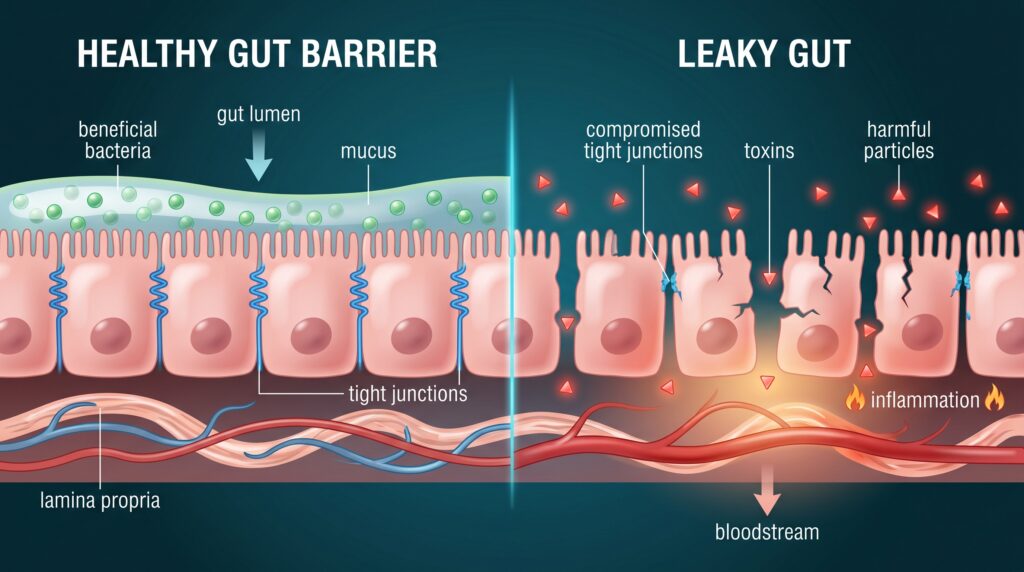
Your gut lining is a remarkable piece of engineering.
Stretched flat, the surface area of your small intestinal lining would cover roughly the size of a tennis court. That entire surface is lined with a single layer of specialized cells called enterocytes, held together by structures called tight junctions — essentially molecular clamps that control precisely what passes from your gut into your bloodstream.
In a healthy gut, this barrier does two things simultaneously: it allows digested nutrients, water, and electrolytes to pass through into the bloodstream, while blocking everything else — undigested food particles, bacteria, bacterial toxins, and waste products.
When those tight junctions become compromised — whether through inflammation, infection, dietary factors, or other stressors — the barrier loses its selective permeability. Gaps open between the cells. Things that should stay inside your gut begin passing through into your bloodstream.
This is intestinal hyperpermeability. This is leaky gut.
The consequence isn’t just digestive. When foreign particles — partially digested food proteins, bacterial fragments, lipopolysaccharides (LPS) from gram-negative bacteria — enter the bloodstream, your immune system responds to them as threats. This triggers systemic inflammation that can affect virtually any organ or tissue in the body.
Skin. Joints. Brain. Thyroid. The list of systems implicated in research on intestinal permeability is long — and growing.
→ Many of the symptoms of leaky gut overlap with signs of general gut dysbiosis. Read: 10 Signs You Have an Unhealthy Gut (And How to Fix It)
Is Leaky Gut a Real Medical Condition?
This is a fair question — and an important one to address directly.
The short answer: intestinal hyperpermeability is absolutely real and extensively documented in medical literature. The controversy is about whether “leaky gut syndrome” as a named clinical diagnosis is recognized, and whether increased gut permeability is a cause of systemic disease or a consequence of it.
What the research clearly shows:
A 2012 review in the journal Gut documented increased intestinal permeability in patients with Crohn’s disease, celiac disease, irritable bowel syndrome, type 1 diabetes, and multiple sclerosis — suggesting that compromised gut barrier function is consistently present across a wide range of inflammatory and autoimmune conditions.
A landmark 2000 study by Dr. Alessio Fasano, published in Gut, identified zonulin — a protein that directly regulates tight junction permeability — as a key molecule in the leaky gut mechanism. Fasano’s subsequent research has made intestinal permeability one of the most actively studied areas in gastroenterology.
A 2021 review in Frontiers in Immunology concluded that intestinal barrier dysfunction plays a central role in the development of inflammatory and autoimmune diseases, and that targeting gut permeability represents a promising therapeutic approach.
The honest summary: the mechanisms are real, the associations are real, the research is growing rapidly. The remaining debate is about terminology and causality — not about whether increased gut permeability exists or matters.
10 Symptoms of Leaky Gut Syndrome
What makes leaky gut genuinely difficult to identify is that its symptoms are diffuse. They show up in different systems, at different times, with varying severity — making it easy to miss the common thread running through all of them.
1. Chronic Bloating and Digestive Discomfort
The most common presenting symptom. When the gut barrier is compromised, bacterial fermentation patterns change, gas production increases, and motility is often disrupted. Bloating in leaky gut tends to be persistent and relatively unpredictable — not reliably tied to specific foods.
→ Read more: Why Am I Always Bloated? 8 Real Causes and Natural Remedies
2. Multiple Food Intolerances Developing Simultaneously
One of the most telling signs. When partially digested food proteins cross the gut barrier repeatedly, the immune system can develop reactions to them. If you’ve noticed that your list of “foods that don’t agree with me” has expanded significantly over a period of months or years — particularly across multiple food groups — this pattern strongly suggests compromised gut barrier function rather than specific food intolerances in isolation.
3. Chronic Fatigue and Low Energy
When bacterial endotoxins (particularly lipopolysaccharides from gram-negative bacteria) enter the bloodstream through a leaky gut, they trigger an immune response that consumes significant energy. Chronic low-grade inflammation is metabolically expensive. The result is persistent fatigue that doesn’t improve with rest — often one of the earliest and most disabling symptoms of leaky gut.
4. Skin Conditions — Acne, Eczema, Rosacea, Psoriasis
The gut-skin axis is bidirectional and well-documented. Inflammatory signals originating in the gut travel through the bloodstream and can manifest as skin inflammation. Research published in Clinics in Dermatology found that patients with acne rosacea had significantly higher rates of small intestinal bacterial overgrowth — and treating the gut condition improved the skin condition in the majority of cases.
5. Brain Fog and Cognitive Difficulties
Bacterial endotoxins and inflammatory cytokines that enter the bloodstream from a leaky gut can cross the blood-brain barrier and directly impair neurological function. This manifests as difficulty concentrating, word retrieval problems, mental sluggishness, and poor short-term memory — collectively described as brain fog.
6. Joint Pain and Inflammation
When foreign particles from the gut enter the bloodstream and circulate systemically, they can trigger inflammatory responses in joint tissue. Research has found elevated markers of intestinal permeability in patients with rheumatoid arthritis and other inflammatory joint conditions — suggesting a gut-joint axis that parallels the gut-brain and gut-skin axes.
7. Autoimmune Conditions
This is perhaps the most significant and well-researched association. Dr. Fasano’s research has proposed that increased intestinal permeability may be a necessary precondition for autoimmune disease development — suggesting the sequence: genetic predisposition + environmental trigger + leaky gut = autoimmune activation. Conditions associated with leaky gut in research include Hashimoto’s thyroiditis, rheumatoid arthritis, celiac disease, multiple sclerosis, and type 1 diabetes.
8. Frequent Infections and Lowered Immunity
With 70% of your immune system residing in your gut, a compromised gut barrier doesn’t just allow things out — it impairs the immune system’s ability to function properly. The result can be increased susceptibility to infections, slower recovery, and an immune system that’s chronically occupied fighting low-grade inflammation rather than external threats.
9. Anxiety and Depression
The gut-brain axis runs bidirectionally. When inflammatory signals from the gut reach the brain, they can disrupt neurotransmitter production — particularly serotonin, of which 95% is produced in the gut. Several studies have now found significant correlations between markers of intestinal permeability and both anxiety and depressive symptoms, independent of gastrointestinal complaints.
10. Nutritional Deficiencies Despite Adequate Diet
A damaged gut lining is less efficient at absorbing nutrients. Even when eating a nutritionally adequate diet, people with significant leaky gut may be absorbing less of the zinc, magnesium, B vitamins, iron, and omega-3 fatty acids their body needs — creating deficiencies that compound the fatigue, brain fog, and immune dysfunction already present.
7 Root Causes of Leaky Gut
Understanding what damages the gut barrier is essential — because healing leaky gut requires removing the causes, not just treating the symptoms.
1. Diet High in Ultra-Processed Foods
This is the most pervasive and modifiable cause. Ultra-processed foods — those containing emulsifiers, artificial sweeteners, refined seed oils, preservatives, and refined carbohydrates — have been shown to directly damage gut barrier integrity.
Emulsifiers in particular (found in almost every packaged food: polysorbate 80, carboxymethylcellulose, carrageenan) have been shown in multiple studies to disrupt the mucus layer that protects the gut lining and to promote the growth of bacteria with inflammatory properties. A 2015 study in Nature found that common dietary emulsifiers significantly increased intestinal permeability in mice — and promoted metabolic syndrome and inflammatory bowel disease.
2. Chronic Stress
Cortisol — your primary stress hormone — directly increases gut permeability by loosening tight junctions and reducing mucus production. Chronic psychological stress has been shown to measurably increase intestinal permeability within hours of onset, independent of dietary factors.
The practical implication: you can eat a perfect diet and still have leaky gut if your stress is unmanaged. The gut-brain axis makes this unavoidable.
3. Antibiotic Use
Antibiotics are sometimes necessary — but they come with a significant cost to gut barrier integrity. By eliminating beneficial bacteria, antibiotics reduce the protective microbial layer that helps maintain tight junction integrity. Multiple courses of antibiotics, or long-term low-dose use, are associated with significantly increased intestinal permeability.
4. Alcohol
Even moderate alcohol consumption has measurable effects on gut permeability. Alcohol is directly toxic to enterocytes (gut lining cells) and disrupts the tight junction proteins that hold them together. It also promotes the growth of gram-negative bacteria that produce lipopolysaccharides — which further damage the barrier and trigger systemic inflammation.
5. Non-Steroidal Anti-Inflammatory Drugs (NSAIDs)
Ibuprofen, aspirin, and naproxen — among the most commonly used medications in the United States — are well-documented to increase intestinal permeability with regular use. They inhibit prostaglandin production, which is essential for maintaining the protective mucus layer of the gut. Even short-term use (two weeks) has been shown to cause measurable increases in gut permeability in otherwise healthy individuals.
6. Gut Dysbiosis and Infections
A balanced gut microbiome actively supports barrier integrity. Beneficial bacteria produce short-chain fatty acids — particularly butyrate — that directly fuel the cells of the gut lining and help maintain tight junction function. When dysbiosis reduces butyrate-producing bacteria, the gut lining loses this critical source of nourishment and becomes more vulnerable.
Certain infections — H. pylori, Candida overgrowth, and parasitic infections — can also directly damage the gut barrier through inflammatory mechanisms.
7. Gluten (in Susceptible Individuals)
In people with celiac disease, gluten triggers a severe autoimmune response that directly damages the gut lining. But research by Dr. Fasano has shown that gluten stimulates zonulin release — and therefore increases intestinal permeability — in all people, not just those with celiac disease. The effect is more pronounced and more sustained in susceptible individuals, but it is not exclusive to them.
How to Heal Leaky Gut: The 4R Protocol

The most evidence-supported framework for healing leaky gut is called the 4R Protocol — originally developed by functional medicine practitioners and now supported by a growing body of research.
Remove
Remove the primary causes of gut barrier damage: ultra-processed foods, alcohol, NSAIDs (where clinically appropriate), known food triggers, and dietary sources of significant gut disruption.
For most people, this means transitioning to a whole-food diet centered on vegetables, quality proteins, healthy fats, and complex carbohydrates — while minimizing packaged foods, refined sugars, and inflammatory oils.
Replace
Replace what the gut needs to function optimally but may be lacking: digestive enzymes (to ensure complete food breakdown), stomach acid support (if low acid is suspected), and nutrients that support gut lining integrity.
Key nutrients for gut barrier repair include: L-glutamine (the primary fuel for enterocytes), zinc (essential for tight junction protein synthesis), vitamin D (regulates immune function and barrier integrity), and omega-3 fatty acids (anti-inflammatory).
Reinoculate
Reintroduce beneficial bacteria to restore a diverse, balanced microbiome that actively supports gut barrier function.
This means daily fermented foods — yogurt with live cultures, kefir, sauerkraut, kimchi, kombucha — and a high-quality multi-strain probiotic supplement. Look for strains with clinical evidence for gut barrier support, particularly Lactobacillus rhamnosus GG, Lactobacillus plantarum, and Bifidobacterium longum.

💊 Editor’s Pick: Best Probiotic Supplements for Gut Health — our tested recommendations
Repair
Directly support the repair of the gut lining with targeted nutrients.
L-Glutamine is the most well-supported supplement for gut lining repair. It’s the primary energy source for intestinal epithelial cells and has been shown in multiple studies to reduce intestinal permeability and support tight junction integrity. A typical therapeutic dose is 5–10 grams daily.
Collagen peptides provide the raw materials for gut lining tissue repair and have shown promise in early research for reducing gut permeability markers.
Zinc carnosine is a specific form of zinc that has demonstrated gut-protective effects in clinical studies, particularly for maintaining tight junction proteins.
Bone broth contains glycine, proline, and collagen — compounds that support gut lining integrity and are increasingly studied for their role in gut barrier repair.
How Long Does It Take to Heal Leaky Gut?
This is the question everyone wants answered — and the honest answer is: it depends on severity, how consistently you implement changes, and whether you’ve identified and removed the root causes.
General timeline with consistent implementation:
Weeks 1–2: Reduction in acute inflammation as dietary triggers are removed. Some people notice improved digestion and reduced bloating within the first week.
Weeks 3–6: Gut microbiome begins to shift. Fermented foods and probiotic supplementation start to have measurable effects on bacterial diversity.
Weeks 6–12: Gut lining repair begins in earnest with adequate nutrition and reduced inflammation. Most people notice meaningful improvement in energy, skin, and cognitive clarity in this window.
3–6 months: For significant or long-standing leaky gut, this is a more realistic timeline for substantial healing — particularly for autoimmune symptoms or severe food intolerance patterns.
The key insight: symptoms often improve before the gut has fully healed. Don’t take early improvement as a sign you can return to old habits — the repair process takes longer than the symptom relief suggests.
When to See a Doctor
Leaky gut can be approached through diet and lifestyle changes for most people. But professional evaluation is important in certain situations.
Seek medical attention if you have:
- Symptoms of an autoimmune condition (joint pain, thyroid issues, skin conditions affecting large areas of the body)
- Significant unintentional weight loss
- Blood in your stool
- Severe or worsening abdominal pain
- Symptoms that don’t improve after 8–12 weeks of consistent dietary changes
A functional medicine physician or integrative gastroenterologist can order specific tests for intestinal permeability (zonulin blood test, lactulose/mannitol challenge test) and provide a personalized treatment protocol for more severe cases.
The Bottom Line
Leaky gut — intestinal hyperpermeability — is a real, well-documented phenomenon that connects gut barrier dysfunction to a remarkably wide range of symptoms: digestive, cognitive, dermatological, immunological, and neurological.
It develops gradually, through the cumulative effects of diet, stress, medication use, and lifestyle factors that are common in modern American life. And it heals gradually — through the equally consistent application of the right dietary changes, targeted supplementation, and stress management.
The 4R Protocol — Remove, Replace, Reinoculate, Repair — gives you a clear framework to work through. Most people who implement it consistently see meaningful improvement within 6–12 weeks.
Your gut lining replaces itself entirely every 3–5 days under optimal conditions. The capacity for repair is built in. What it needs is the right environment to do its job.
→ Also read: 10 Signs You Have an Unhealthy Gut (And How to Fix It)
→ Also read: Why Am I Always Bloated? 8 Real Causes and Natural Remedies
References & Further Reading
- Fasano A. “Leaky gut and autoimmune diseases.” Clinical Reviews in Allergy & Immunology, 2012.
- Fasano A. “Zonulin and its regulation of intestinal barrier function.” Physiological Reviews, 2011.
- Odenwald MA, Turner JR. “The intestinal epithelial barrier: a therapeutic target?” Nature Reviews Gastroenterology & Hepatology, 2017.
- Chassaing B, et al. “Dietary emulsifiers impact the mouse gut microbiota promoting colitis and metabolic syndrome.” Nature, 2015.
- Camilleri M. “Leaky gut: mechanisms, measurement and clinical implications in humans.” Gut, 2019.
- Mu Q, et al. “Leaky Gut As a Danger Signal for Autoimmune Diseases.” Frontiers in Immunology, 2017.
This article is for informational purposes only and does not constitute medical advice. Always consult a qualified healthcare professional for personal health concerns.






6 Comments