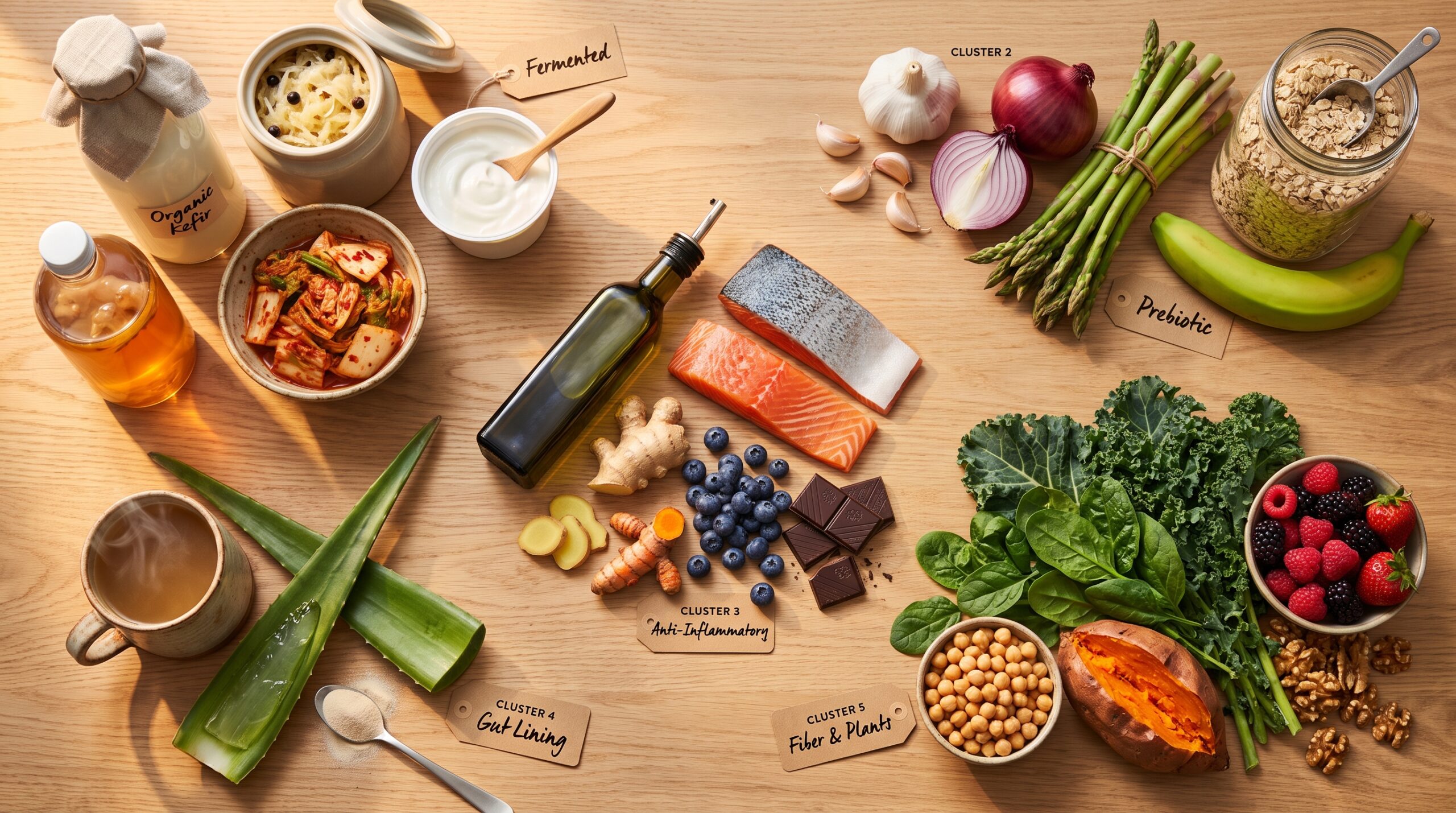
Best Foods for a Healthy Gut: The Complete Quick Guide
You don’t need a complicated protocol to start improving your gut health.
Sometimes the most useful thing is a clear, practical list — the foods that actually matter, explained simply, without the usual flood of caveats and qualifications that makes most nutrition content impossible to act on.
That’s what this guide is.
Whether you’re new to gut health or looking for a quick reference to share or come back to, here are the best foods for a healthy gut — organized by category, with the key benefit of each and the simplest way to add it to your routine.
Why Food Is the Foundation of Gut Health
Before the list: a quick reminder of why this matters.
Your gut microbiome — the trillions of bacteria, fungi, and other microorganisms living in your digestive tract — responds to what you eat within 24 to 48 hours. Feed it well, and it produces the short-chain fatty acids, neurotransmitters, and immune signals that keep your body functioning optimally. Feed it poorly, and dysbiosis follows — with consequences that ripple into your digestion, your mood, your energy, your skin, and your immune system.
No supplement replaces this foundation. The foods below are where gut health actually begins.
If you want to understand the deeper science, read: 15 Foods That Heal Your Gut and Reduce Inflammation
Category 1: Fermented Foods (Live Probiotics)
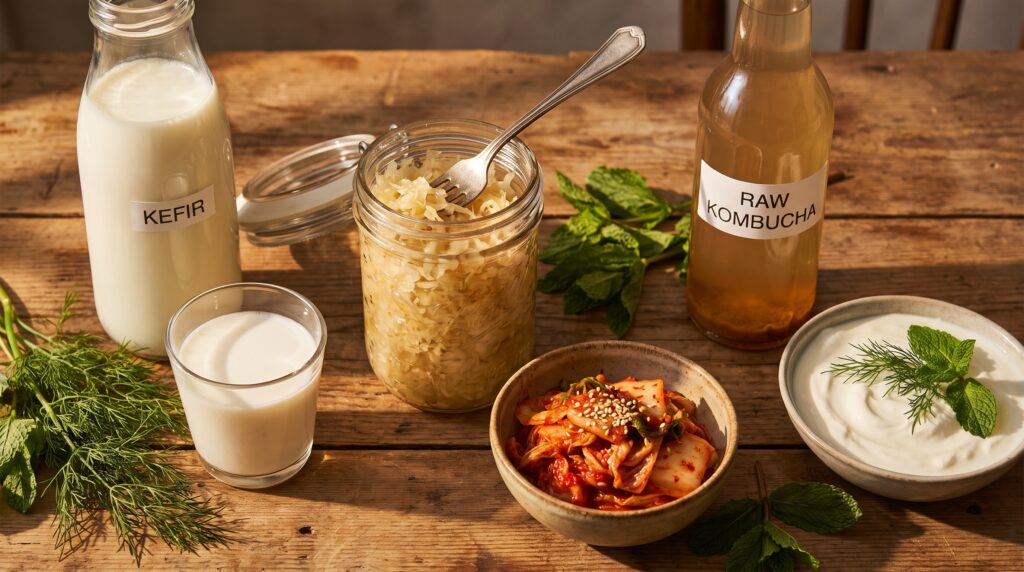
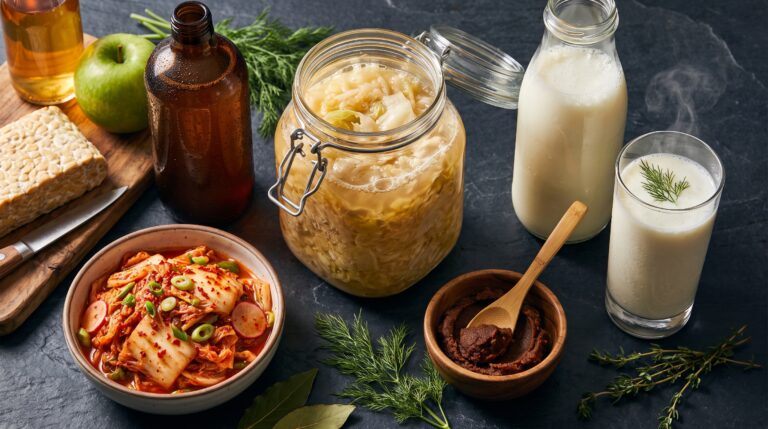
These foods introduce beneficial bacteria directly into your gut. Prioritize at least one daily.
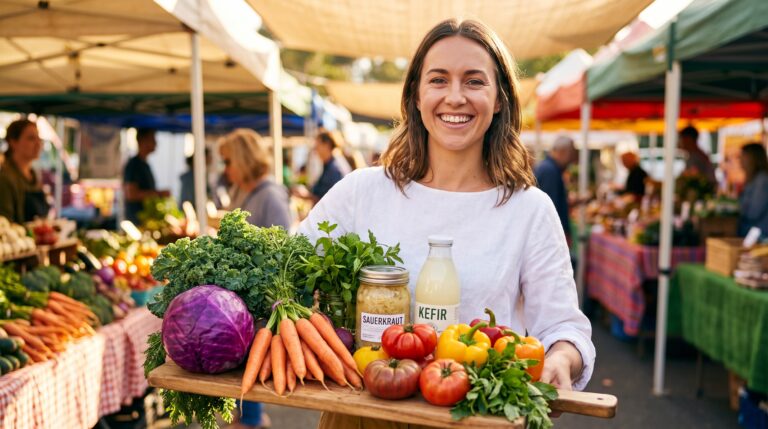
Kefir — the single most probiotic-rich food available, containing 12 or more bacterial strains. Drink 1 cup daily, plain and unsweetened. Use it as the liquid base for overnight oats or smoothies if you don’t enjoy it straight.
Sauerkraut (unpasteurized) — refrigerated only. Shelf-stable sauerkraut in cans is pasteurized and contains no live bacteria. Two to three tablespoons alongside any savory meal is enough to deliver meaningful probiotic benefit daily.
Kimchi — fermented cabbage with garlic, ginger, and chili. Provides both probiotics and prebiotic fiber simultaneously. Two to four tablespoons as a side dish three to four nights per week is a practical starting point.
Plain yogurt with live cultures — look for “live and active cultures” explicitly on the label. Full-fat, unsweetened varieties are significantly better than flavored or low-fat options. One cup daily.
Kombucha — fermented tea with moderate probiotic content. Four to eight ounces before a meal provides digestive benefit without excess sugar. Choose raw, unpasteurized varieties.
Miso — one tablespoon dissolved in warm (never boiling) water or added to dressings. Rich in beneficial bacteria and digestive enzymes. Never heat above 115°F or the live cultures are destroyed.
Category 2: Prebiotic Foods (Fuel for Good Bacteria)
These foods feed the beneficial bacteria already living in your gut. Without them, even the best probiotics struggle to establish themselves.
Garlic — one of the richest prebiotic sources available. Even one clove daily makes a meaningful difference. Raw garlic has the highest prebiotic activity — crush or chop and let sit 10 minutes before using to maximize allicin formation. Add to dressings, dips, or stir-fries.
Onions — high in inulin and fructooligosaccharides (FOS), two of the best-studied prebiotic fibers. Eat raw in salads for maximum benefit or cooked in soups and stir-fries.
Leeks — milder than onions, equally prebiotic. Add to soups, sauté with olive oil as a side, or use as a base for grain dishes.
Asparagus — one of the richest plant sources of inulin. Six to eight spears roasted in olive oil with garlic is a gut-health meal in itself.
Green (unripe) bananas — high in resistant starch, which feeds butyrate-producing bacteria. Slice into smoothies or eat with almond butter. The greener, the more prebiotic benefit — ripe bananas have converted most of their resistant starch to simple sugar.
Oats (steel-cut or rolled) — rich in beta-glucan, one of the best-studied prebiotic fibers with specific evidence for increasing Bifidobacterium populations. A bowl of overnight oats made with kefir combines Category 1 and Category 2 in one meal.
Jerusalem artichokes — the most concentrated food source of inulin available. Introduce gradually — their prebiotic potency can cause gas initially in sensitive guts.
Category 3: Anti-Inflammatory Foods
These foods reduce the gut inflammation that prevents healing and disrupts the microbiome. Chronic gut inflammation is behind most persistent gut symptoms — and food is the most powerful tool for managing it.
Extra virgin olive oil — 2 to 3 tablespoons daily. Use as your primary cooking fat and salad dressing base. The polyphenols in EVOO directly inhibit the same inflammatory enzymes as ibuprofen, without damaging the gut lining. Buy in dark glass with a harvest date within the past 18 months.
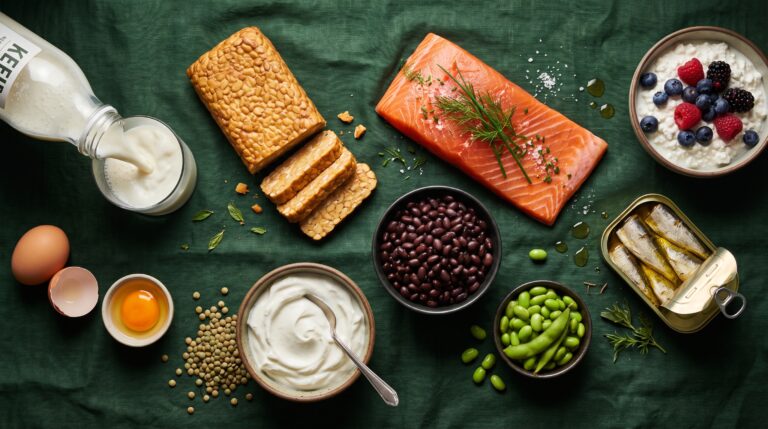
Wild-caught salmon — 2 to 3 servings per week. The EPA and DHA omega-3 fatty acids in salmon reduce gut inflammation at the cellular level and have demonstrated specific effects on microbiome composition, increasing beneficial bacterial populations.
Turmeric with black pepper — curcumin (the active compound in turmeric) is one of the most potent natural anti-inflammatory compounds studied. Always combine with black pepper — piperine increases curcumin absorption by up to 2,000%. Add to soups, curries, rice, or golden milk.
Blueberries — half to one cup daily. Their polyphenols feed beneficial bacteria and directly reduce gut inflammation markers. Wild blueberries contain two to three times more polyphenols than cultivated varieties and are widely available frozen.
Ginger — fresh is more potent than dried. Grate into hot water for ginger tea, add to stir-fries and smoothies, or juice with lemon. Accelerates gastric emptying and reduces gut hypersensitivity with documented clinical evidence.
Dark chocolate (85% cacao or higher) — one to two squares daily. High flavanol content feeds polyphenol-metabolizing bacteria and reduces inflammatory markers. Below 85%, the sugar content begins to outweigh the benefit.
Category 4: Gut-Lining Repair Foods
These foods directly support the physical integrity of the gut lining — the barrier that, when compromised, allows inflammatory compounds to enter the bloodstream and drive systemic symptoms.
Bone broth — rich in L-glutamine, collagen, glycine, and proline — the structural building blocks of gut lining tissue. One to two cups daily, drunk warm or used as a base for soups and grains. Homemade from quality bones is significantly richer in these compounds than most commercial options. Look for organic, grass-fed versions if buying.
Collagen peptides — if bone broth isn’t practical daily, collagen powder dissolved in coffee, smoothies, or water provides similar gut lining support. One scoop (10–20 grams) daily.
L-glutamine powder — the primary energy source for intestinal epithelial cells. Five grams dissolved in water on an empty stomach supports gut lining repair directly. Most practical as a supplement rather than a food, but worth including in any serious gut healing protocol.
Aloe vera juice (inner fillet) — gentle anti-inflammatory and gut lining soothing properties. Two to four ounces of pure inner fillet aloe vera juice before meals. Look for products without added sugar or aloin (the laxative compound found in the outer leaf).
If you’re dealing with gut lining damage specifically, read: What Is Leaky Gut Syndrome? Symptoms, Causes and How to Heal
Category 5: High-Fiber Diverse Plants
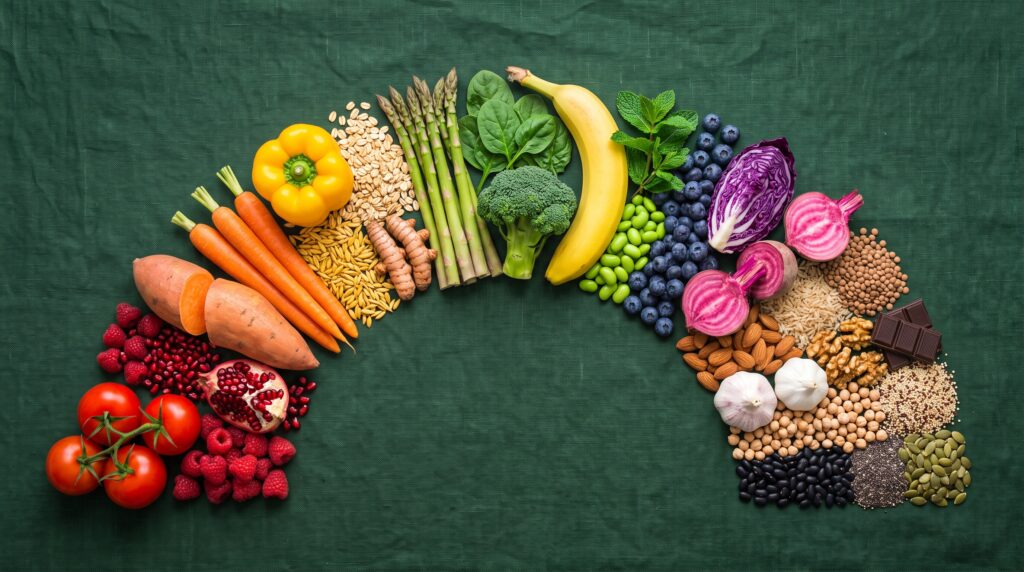
Fiber diversity is the single most important dietary factor for microbiome diversity — and microbiome diversity is the single most consistent predictor of gut health across the research literature.
The goal: 30 different plant foods per week. It’s more achievable than it sounds.
Dark leafy greens — spinach, kale, arugula, Swiss chard, collard greens. Rotate between them rather than eating the same one every day. Each provides a slightly different fiber composition that feeds different bacterial species.
Legumes — black beans, lentils, chickpeas, edamame. Among the highest-fiber foods available and specifically associated with increased Bifidobacterium populations. If legumes cause bloating initially, start with small portions and increase gradually as your microbiome adapts.
Cruciferous vegetables — broccoli, cauliflower, Brussels sprouts, cabbage. Rich in glucosinolates with specific anti-inflammatory and gut-protective properties. Lightly steam rather than boil to preserve their beneficial compounds.
Root vegetables — sweet potato, beets, carrots, parsnips. Provide diverse fiber types that feed different gut bacterial species than leafy greens or cruciferous vegetables.
Berries beyond blueberries — strawberries, raspberries, blackberries, pomegranate. Each contains a distinct polyphenol profile that feeds different beneficial bacterial populations. Rotating between them increases microbial diversity faster than eating the same berry daily.
Whole grains — quinoa, brown rice, barley, buckwheat, millet. Rotate between different grains across the week. Each provides a different fiber composition and contributes a new plant food toward your weekly diversity target.
Nuts and seeds — almonds, walnuts, pumpkin seeds, chia seeds, flaxseed. Each counts as a separate plant food. A handful of mixed nuts and a tablespoon of ground flaxseed added to overnight oats provides four to five different plant foods with minimal effort.
Category 6: Foods to Minimize
Equally important as knowing what to add is knowing what to reduce. These foods actively damage the gut microbiome and undermine everything in the categories above.
Ultra-processed foods — anything made with emulsifiers (polysorbate 80, carrageenan, carboxymethylcellulose), artificial sweeteners, refined seed oils, or refined flour. Emulsifiers in particular directly damage the gut’s protective mucus layer. This single category, reduced consistently, produces more microbiome improvement than almost any supplement.
Refined sugar — selectively feeds harmful bacterial species and yeast while starving the beneficial bacteria that need complex fiber. Reducing refined sugar is the dietary change with the most consistent evidence for improving Firmicutes/Bacteroidetes ratio.
Alcohol — directly toxic to gut lining cells and promotes gram-negative bacterial overgrowth. Significant gut microbiome disruption occurs even at moderate intake levels. Reducing to one drink daily or fewer produces measurable microbiome improvement.
Refined seed oils — canola, soybean, corn, sunflower oils high in omega-6 fatty acids promote an inflammatory microbiome environment. Replace with extra virgin olive oil, avocado oil, and butter for cooking.
A Simple Daily Template
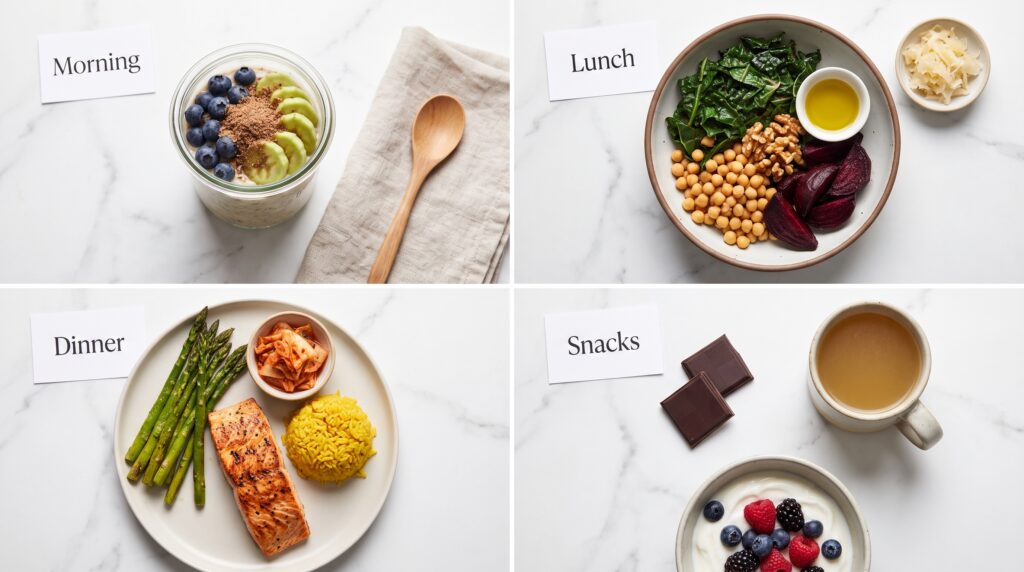
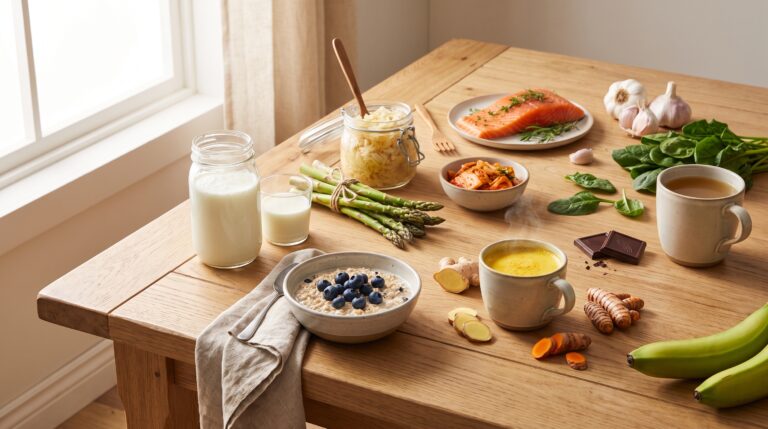
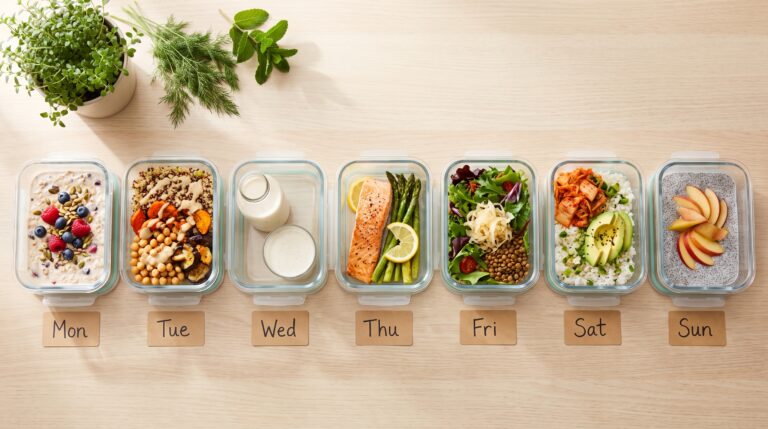
You don’t need to eat from every category every day. Here’s a practical daily template that covers the most important bases with minimal effort:
Morning: Overnight oats made with kefir (Categories 1 + 2), topped with blueberries, ground flaxseed, and a green banana sliced in (Categories 3 + 5).
Lunch: Large salad with mixed dark leafy greens, chickpeas, roasted beets, walnuts, raw garlic in olive oil dressing, two tablespoons of sauerkraut on the side (Categories 1 + 2 + 3 + 5).
Dinner: Wild-caught salmon or plant protein, roasted asparagus and broccoli in olive oil, a side of kimchi, turmeric-seasoned grain (Categories 1 + 2 + 3 + 4 + 5).
Snacks: Two squares of 85% dark chocolate, a cup of bone broth, or a small bowl of plain yogurt with berries.
This daily template alone covers over 20 different plant foods — well on track toward the weekly diversity target of 30.
The Bottom Line
Gut health doesn’t require an expensive protocol or a complicated elimination diet. It requires consistency with a relatively small set of evidence-backed foods — fermented foods daily, prebiotic fiber at most meals, anti-inflammatory fats, gut-lining supportive foods regularly, and as many different plant varieties as practically possible across the week.
Start with one category. Add the next when the first feels routine. Within four to six weeks of consistent change, most people notice meaningful improvements in digestion, energy, and overall wellbeing.
Your gut responds to what you feed it, every single day. The foods above are where that process begins.
💊 Want to accelerate results? A quality probiotic combined with these foods produces faster microbiome improvement than diet alone. See Will Silva’s top pick on Amazon (affiliate link — independently researched)
→ Read next: Gut Health Diet Plan for Beginners: A Complete 7-Day Guide
→ Also read: How to Improve Your Gut Microbiome Naturally (7 Proven Ways)
Frequently Asked Questions
Q: What is the single best food for gut health? A: Kefir has the strongest and most consistent scientific evidence for improving gut microbiome composition — providing 12 or more bacterial strains, reducing inflammation, and supporting gut lining integrity simultaneously. If you add only one food from this guide, make it daily plain kefir.
Q: How quickly do gut-healthy foods produce results? A: Measurable microbiome changes can occur within 24–48 hours of dietary change. Most people notice improvements in digestion and energy within two to four weeks of consistently including fermented foods, prebiotic fiber, and reducing ultra-processed food.
Q: Do I need to eat all 30 plant foods every single week? A: Thirty per week is a target, not a rigid requirement. Even increasing from 10 to 20 different plant foods weekly produces significant microbiome diversity improvements. The direction matters more than hitting an exact number.
Q: Can I eat these foods if I have IBS? A: Most are well-tolerated, but some high-FODMAP options (garlic, onions, asparagus, legumes) may need to be introduced gradually or in small amounts. Start with lower-FODMAP options from each category — oats, blueberries, salmon, spinach, kefir — and introduce others slowly as tolerance develops.
Q: Is organic necessary for gut health benefits? A: Not strictly necessary, but pesticide residues — particularly glyphosate — have documented negative effects on gut bacteria. Prioritizing organic for the “dirty dozen” highest-pesticide produce items is a reasonable middle ground if budget is a consideration.
References & Further Reading
- Wastyk HC, et al. “Gut-microbiota-targeted diets modulate human immune status.” Cell, 2021.
- McDonald D, et al. “American Gut: an Open Platform for Citizen Science Microbiome Research.” mSystems, 2018.
- Marco ML, et al. “Health benefits of fermented foods: microbiota and beyond.” Current Opinion in Biotechnology, 2017.
- Sonnenburg JL & Bäckhed F. “Diet–microbiota interactions as moderators of human metabolism.” Nature, 2016.
- Dahl WJ & Stewart ML. “Position of the Academy of Nutrition and Dietetics: Health Implications of Dietary Fiber.” Journal of the Academy of Nutrition and Dietetics, 2015.
This article is for informational purposes only and does not constitute medical advice. Always consult a qualified healthcare professional for personal health concerns.


2 Comments