Gut Health Diet Plan for Beginners: A Complete 7-Day Guide
Most gut health advice tells you what to eat. Almost none of it tells you how to actually structure your days.
That gap is where most people get stuck. You read that fermented foods, fiber, and probiotics matter. You understand the science. And then Monday morning arrives and you have no idea what to actually put on your plate.
This guide closes that gap.
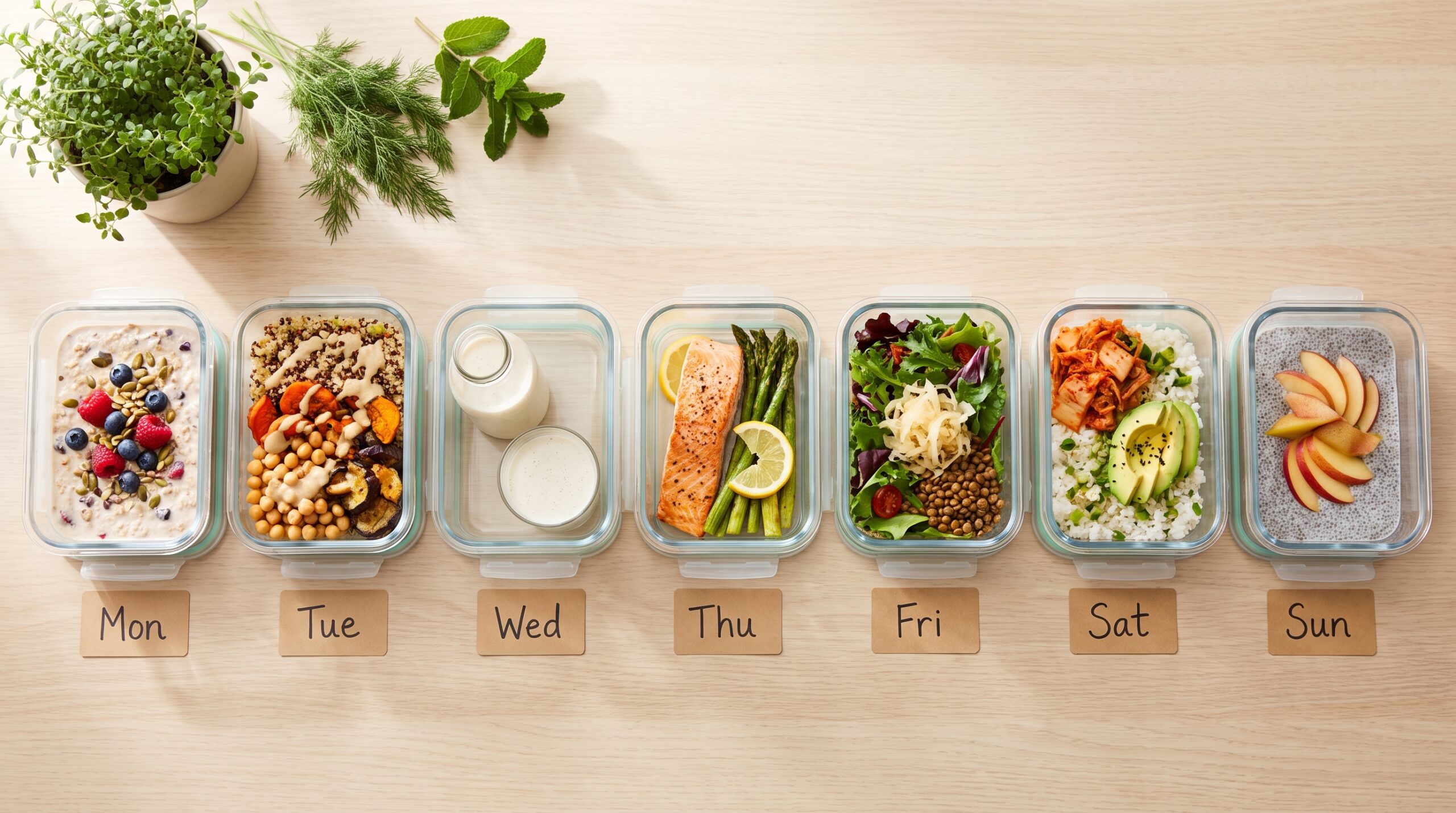
What follows is a complete, structured 7-day gut health diet plan — built specifically for beginners who want a clear starting point, not another list of “foods to eat” with no framework for putting them together. Every day includes specific meals, practical swaps, and the reasoning behind each choice, so you understand not just what to do but why it works.
By the end of this week, you’ll have built habits — fermented foods daily, diverse plants, adequate fiber, reduced processed food — that the research consistently shows produce measurable gut health improvements.
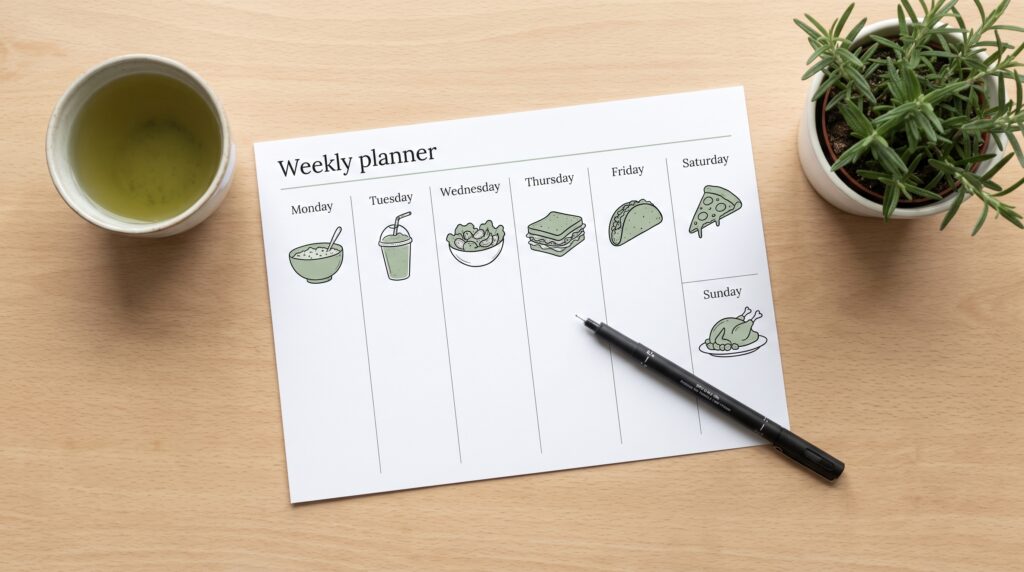
Quick Reference: The 7-Day Structure
| Day | Focus | Key Addition |
|---|---|---|
| 1 | Baseline reset | Remove ultra-processed foods |
| 2 | Fermented foods introduction | Kefir or yogurt daily |
| 3 | Plant diversity | Target 10+ plant foods |
| 4 | Prebiotic fiber focus | Garlic, onion, oats, bananas |
| 5 | Anti-inflammatory emphasis | Omega-3s, turmeric, olive oil |
| 6 | Full integration | All elements combined |
| 7 | Sustainable rhythm | Plan for week 2 and beyond |
Before You Start: 5 Principles of This Plan
This plan isn’t about restriction. It’s built around five evidence-based principles that, applied consistently, produce the gut health improvements the research supports.
Principle 1 — Add before you remove. Most gut health plans start by telling you what to cut out. This one starts by adding fermented foods, fiber, and plant diversity. Research consistently shows that crowding out harmful foods with beneficial ones is more sustainable than restriction alone.
Principle 2 — Diversity matters more than perfection. You don’t need to eat “perfectly” every day. You need variety across the week. A wider range of plant foods feeds a wider range of beneficial bacteria — this is one of the most consistent findings in microbiome research.
Principle 3 — Consistency beats intensity. Eating fermented foods every day in modest amounts produces better results than eating large amounts occasionally. Your microbiome responds to patterns, not single meals.
Principle 4 — Expect some adjustment. Increasing fiber and fermented foods can temporarily increase gas or bloating in the first few days as your microbiome adapts. This is normal and typically resolves within a week. If you’re already experiencing significant bloating, read: Why Am I Always Bloated? 8 Real Causes and Natural Remedies
Principle 5 — This is a starting framework, not a rigid prescription. Swap any meal for an equivalent option based on your preferences, allergies, or what’s available. The structure matters more than the specific foods.
Day 1: Baseline Reset
The goal today isn’t to add anything dramatic — it’s to remove the foods that actively work against gut health, creating a cleaner baseline for the additions in the days ahead.
Morning: Start with a glass of water with fresh lemon upon waking — this supports digestion and hydration before your first meal. For breakfast, two eggs cooked in olive oil with sautéed spinach and a side of fresh berries. Simple, whole-food, no processed ingredients.
Midday: A large salad with mixed greens, grilled chicken or chickpeas, cucumber, cherry tomatoes, and an olive oil and lemon dressing. Avoid bottled dressings — most contain emulsifiers and added sugars that work against gut health.
Evening: Baked salmon or a plant-based protein of choice, roasted vegetables (broccoli, carrots, or zucchini) tossed in olive oil, and a small portion of quinoa or brown rice.
Throughout the day: Replace any sodas, fruit juices, or sweetened beverages with water, herbal tea, or sparkling water with fresh fruit.
Today’s focus food: Extra virgin olive oil — use it generously in cooking and dressings. Its polyphenol content provides antimicrobial and anti-inflammatory benefits from day one.
What you’re removing today: Packaged snacks, sodas, fast food, anything with an ingredients list longer than five items you don’t recognize.
Day 2: Introduce Fermented Foods
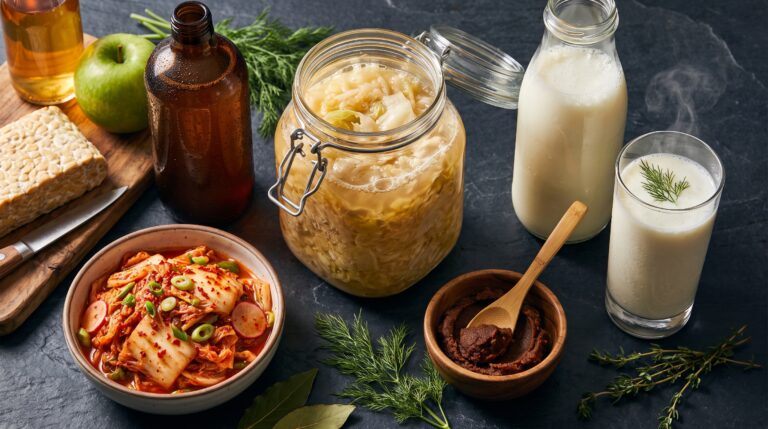
Today you add the single most impactful category of foods for gut microbiome improvement: fermented foods containing live beneficial bacteria.
Morning: Overnight oats made with plain kefir instead of regular milk, topped with fresh blueberries and a tablespoon of ground flaxseed. Prepare this the night before — combine oats, kefir, and flaxseed in a jar and refrigerate overnight.
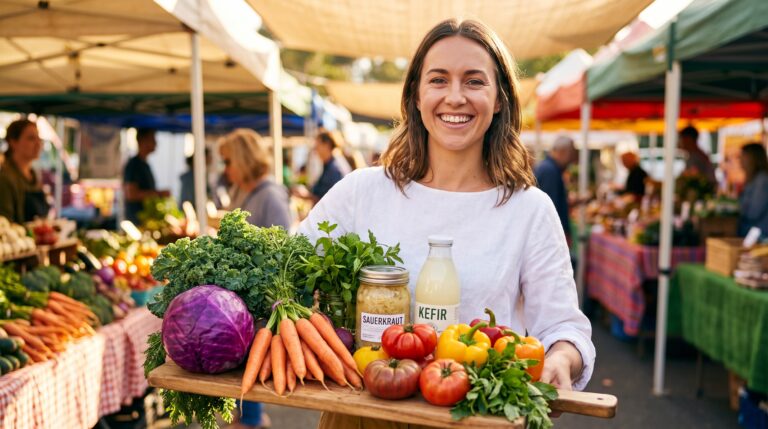
Midday: A grain bowl with brown rice, roasted vegetables, a fried or poached egg, and 2 tablespoons of sauerkraut on the side. The tang of sauerkraut pairs naturally with grain bowls and adds a meaningful dose of live bacteria.
Evening: Stir-fry with your choice of protein, mixed vegetables, garlic and ginger, served over rice, with a small side of kimchi.
Today’s focus food: Kefir and sauerkraut — both introduced in small amounts (1 cup kefir, 2 tablespoons sauerkraut) to allow your gut to adjust gradually.
A note on starting fermented foods: If you’ve never regularly eaten fermented foods, start with these modest amounts. Increasing too quickly can cause temporary gas or bloating. By day 4 or 5, most people can comfortably increase portions.
Day 3: Build Plant Diversity
Today’s target: at least 10 different plant foods across your three meals. This single change has more research support for improving microbiome diversity than almost any other dietary intervention.
Morning: A smoothie with spinach, frozen mixed berries, half a banana, a tablespoon of almond butter, and unsweetened almond milk. This single smoothie can contain 5–6 different plant foods.
Midday: A Buddha bowl: quinoa, roasted sweet potato, chickpeas, shredded purple cabbage, sliced cucumber, avocado, and a tahini-lemon dressing. This one bowl alone provides 7 distinct plant foods.
Evening: A vegetable-forward pasta or grain dish: whole wheat or legume-based pasta with a sauce built from tomatoes, garlic, onion, zucchini, and fresh basil, topped with a protein of your choice.
Today’s focus food: Variety itself. Count your plant foods today — most people are surprised to discover they easily exceed 10 without extra effort, simply by being intentional about it.
Running tally toward 30 plant foods per week: By the end of today, you should be approaching 20+ different plant foods consumed since Day 1 — well on track toward the weekly diversity target. Learn more about why this matters: How to Improve Your Gut Microbiome Naturally (7 Proven Ways)
Day 4: Prebiotic Fiber Focus
Probiotics need fuel. Today emphasizes prebiotic fiber — the food source that feeds the beneficial bacteria you’ve been introducing over the past three days.
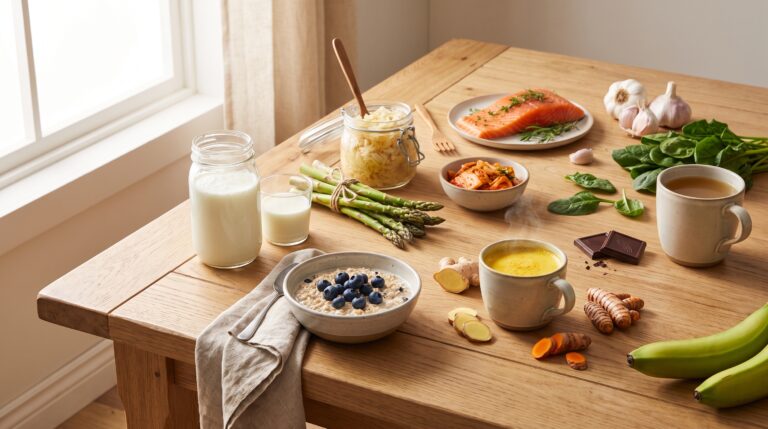
Morning: Oatmeal made with steel-cut oats, topped with a sliced green banana, a drizzle of honey, and cinnamon. Steel-cut oats retain more beta-glucan and resistant starch than instant varieties.
Midday: A hearty soup built on a base of sautéed garlic, onion, and leeks, with lentils, carrots, and celery, finished with fresh herbs. This combination delivers significant inulin and FOS — two of the most well-studied prebiotic fibers.
Evening: Roasted asparagus and Jerusalem artichokes (if available) as a side to your protein of choice, with a small portion of whole grain on the side.
Today’s focus food: Garlic and onion — used generously throughout the day. If you’re sensitive to FODMAPs, reduce quantities and monitor your response; even small amounts provide meaningful prebiotic benefit.
Why this matters: Without adequate prebiotic fiber, the beneficial bacteria introduced through fermented foods can’t establish themselves effectively. Days 2-4 together — probiotics, plant diversity, and prebiotics — form the foundational trio of gut microbiome support.
Day 5: Anti-Inflammatory Emphasis
Today shifts focus to foods that actively reduce gut inflammation — supporting not just bacterial balance but the physical healing of the gut lining itself.
Morning: A turmeric golden smoothie: unsweetened plant milk, half a banana, a teaspoon of turmeric, a pinch of black pepper (essential for curcumin absorption), a tablespoon of almond butter, and a small piece of fresh ginger.
Midday: A large salad with massaged kale, roasted beets, walnuts, goat cheese (optional), and an olive oil-based dressing. Massaging kale with a small amount of olive oil and lemon before serving breaks down its tough cellulose structure, making it easier to digest.
Evening: Wild-caught salmon with a side of roasted vegetables and a turmeric-ginger rice pilaf. This meal combines three of the most evidence-supported anti-inflammatory foods in one plate: omega-3s from salmon, curcumin from turmeric, and gingerols from ginger.
Today’s focus food: Turmeric paired with black pepper — remember, curcumin absorption increases significantly when combined with piperine from black pepper.
Snack idea for today: Two squares of 85% dark chocolate — its polyphenol content supports both anti-inflammatory and prebiotic functions simultaneously.
Day 6: Full Integration
By today, you’re combining everything from the previous five days — fermented foods, plant diversity, prebiotic fiber, and anti-inflammatory foods — into a complete, balanced approach.
Morning: Kefir smoothie bowl: blend kefir with frozen berries and half a banana until thick, top with granola, sliced almonds, pumpkin seeds, and fresh blueberries. This single bowl combines probiotics, prebiotics, polyphenols, and healthy fats.
Midday: A loaded grain bowl: quinoa base, roasted sweet potato, sautéed garlic and spinach, chickpeas, a spoonful of sauerkraut, avocado, and tahini dressing. Six to seven distinct gut-supporting elements in one meal.
Evening: A sheet-pan dinner: salmon, asparagus, and broccoli roasted together with olive oil, garlic, and lemon, served with a side of kimchi and a small portion of brown rice.
Today’s focus: Notice how naturally these elements combine once you understand the principles. This is what a sustainable, long-term gut health diet actually looks like in practice — not a restrictive protocol, but an integrated way of eating.
Take stock: By the end of today, most people report noticeably reduced bloating, more stable energy throughout the day, and easier digestion compared to Day 1. These early changes reflect the rapid responsiveness of the gut microbiome to dietary shifts — measurable changes can occur within just a few days.
Day 7: Sustainable Rhythm
The final day of this plan isn’t an endpoint — it’s a template for how to structure your eating going forward.
Morning: Your choice of any breakfast from the previous six days — by now, you likely have a favorite. Most people gravitate toward the kefir-based options for their simplicity and effectiveness.
Midday: A “clean out the fridge” bowl — combine whatever vegetables, grains, and protein you have on hand, using the principles from this week: a base grain, 3-4 vegetables, a protein source, a fermented food addition, and a healthy fat-based dressing.
Evening: A relaxed, social meal — gut health doesn’t require eating alone or anxiously scrutinizing every ingredient. Apply the 80/20 principle: if 80% of your meals follow these patterns, occasional flexibility for the remaining 20% won’t undermine your progress.
Today’s reflection: Look back at what worked well this week. Which fermented foods did you enjoy most? Which meals felt easiest to prepare? Building a sustainable gut health routine means identifying what fits naturally into your life — not forcing yourself through meals you dread.
What to Expect After Week 1
Most people notice some combination of the following by the end of this 7-day plan: reduced bloating, more regular and comfortable bowel movements, improved energy levels (particularly in the afternoon), and reduced sugar cravings as the microbiome shifts toward more balanced bacterial populations.
These early changes are encouraging — but they represent the beginning of a longer process. Research consistently shows that meaningful, sustained microbiome diversity improvements develop over 3 to 6 months of consistent habits, not just one week.
The goal of this plan isn’t to complete it once and return to old patterns. It’s to establish the foundational habits — fermented foods daily, plant diversity, prebiotic fiber, reduced processed food — that, sustained over months, produce the gut health improvements the research supports.
How to Continue Beyond Week 1
Repeat the structure, vary the specifics. Use this same 7-day framework as a template — swap proteins, rotate vegetables, try new fermented foods (try kombucha or miso if you haven’t yet) — while keeping the underlying principles consistent.
Track your 30 plant foods per week. This becomes easier with practice. Keep a simple running list for a week or two until counting becomes intuitive.
Consider a quality probiotic supplement if you’re not seeing the improvement you’d expect from diet alone, particularly if you’re recovering from antibiotic use or significant gut imbalance.
💊 Editor’s Pick: Best Probiotic for Gut Health — Will Silva’s top recommendation on Amazon
Revisit the foundational foods. If you want to deepen your understanding of why specific foods matter, read: 15 Foods That Heal Your Gut and Reduce Inflammation
Common Questions About Starting a Gut Health Diet
Do I need to follow this exactly, or can I make substitutions?
Substitute freely. The specific foods matter less than the underlying principles: fermented foods daily, plant diversity, adequate prebiotic fiber, reduced processed food, and anti-inflammatory foods regularly. If you dislike salmon, use another omega-3 source. If kimchi isn’t available, double up on sauerkraut.
What if I experience more bloating during this plan, not less?
Some temporary increase in gas or bloating during the first 3-5 days is normal as your microbiome adjusts to increased fiber and fermented foods. If discomfort is significant or persists beyond a week, reduce portions of fermented foods and high-FODMAP items (garlic, onion, legumes) and reintroduce more gradually.
Can I do this plan if I have IBS or a diagnosed digestive condition?
This plan can be adapted, but introduce fermented foods and high-fiber items more gradually than outlined here, and consider working with a registered dietitian familiar with IBS and low-FODMAP approaches. Some foods in this plan (garlic, onion, certain legumes) are high-FODMAP and may need modification for IBS specifically.
Is this plan vegetarian or vegan-friendly?
Yes, with simple substitutions. Replace animal proteins (salmon, chicken, eggs) with plant-based alternatives like tempeh, tofu, additional legumes, or a combination of grains and legumes for complete protein. The fermented food, plant diversity, and prebiotic fiber principles apply equally well to a fully plant-based approach.
The Bottom Line
A gut health diet doesn’t require complicated rules, expensive ingredients, or eliminating entire food groups. It requires a structure — and this 7-day plan gives you exactly that.
Fermented foods daily. Plant diversity across the week. Adequate prebiotic fiber. Reduced processed food. Anti-inflammatory foods regularly. These five elements, applied consistently, align with what the research consistently shows supports a healthier, more diverse gut microbiome.
Use this week as your foundation. Then keep building.
→ Read next: How to Improve Your Gut Microbiome Naturally (7 Proven Ways)
→ Also read: 15 Foods That Heal Your Gut and Reduce Inflammation
→ Also read: 10 Signs You Have an Unhealthy Gut (And How to Fix It)
Frequently Asked Questions
Q: How quickly will I see results from a gut health diet? A: Initial improvements in bloating, energy, and digestion are often noticeable within the first week. More significant, sustained microbiome diversity improvements typically develop over 3 to 6 months of consistent dietary habits.
Q: What’s the most important single change in this 7-day plan? A: If you can only implement one change, daily fermented foods (kefir, sauerkraut, or kimchi) combined with reduced ultra-processed food intake produces the most measurable early impact on gut microbiome composition.
Q: Can I repeat this 7-day plan indefinitely? A: Yes — this plan is designed as a sustainable template, not a short-term cleanse. Repeating it with variation (different vegetables, proteins, and fermented foods) provides ongoing gut health support.
Q: Do I need to buy expensive specialty ingredients? A: No. Every ingredient in this plan is available at standard grocery stores. Sauerkraut, kefir, and kimchi are increasingly common in mainstream supermarkets, not just specialty health stores.
References & Further Reading
- Wastyk HC, et al. “Gut-microbiota-targeted diets modulate human immune status.” Cell, 2021.
- McDonald D, et al. “American Gut: an Open Platform for Citizen Science Microbiome Research.” mSystems, 2018.
- Sonnenburg JL & Bäckhed F. “Diet–microbiota interactions as moderators of human metabolism.” Nature, 2016.
- So D, et al. “Dietary fiber intervention on gut microbiota composition in healthy adults.” American Journal of Clinical Nutrition, 2018.
This article is for informational purposes only and does not constitute medical advice. Always consult a qualified healthcare professional for personal health concerns, particularly if you have a diagnosed digestive condition.


6 Comments