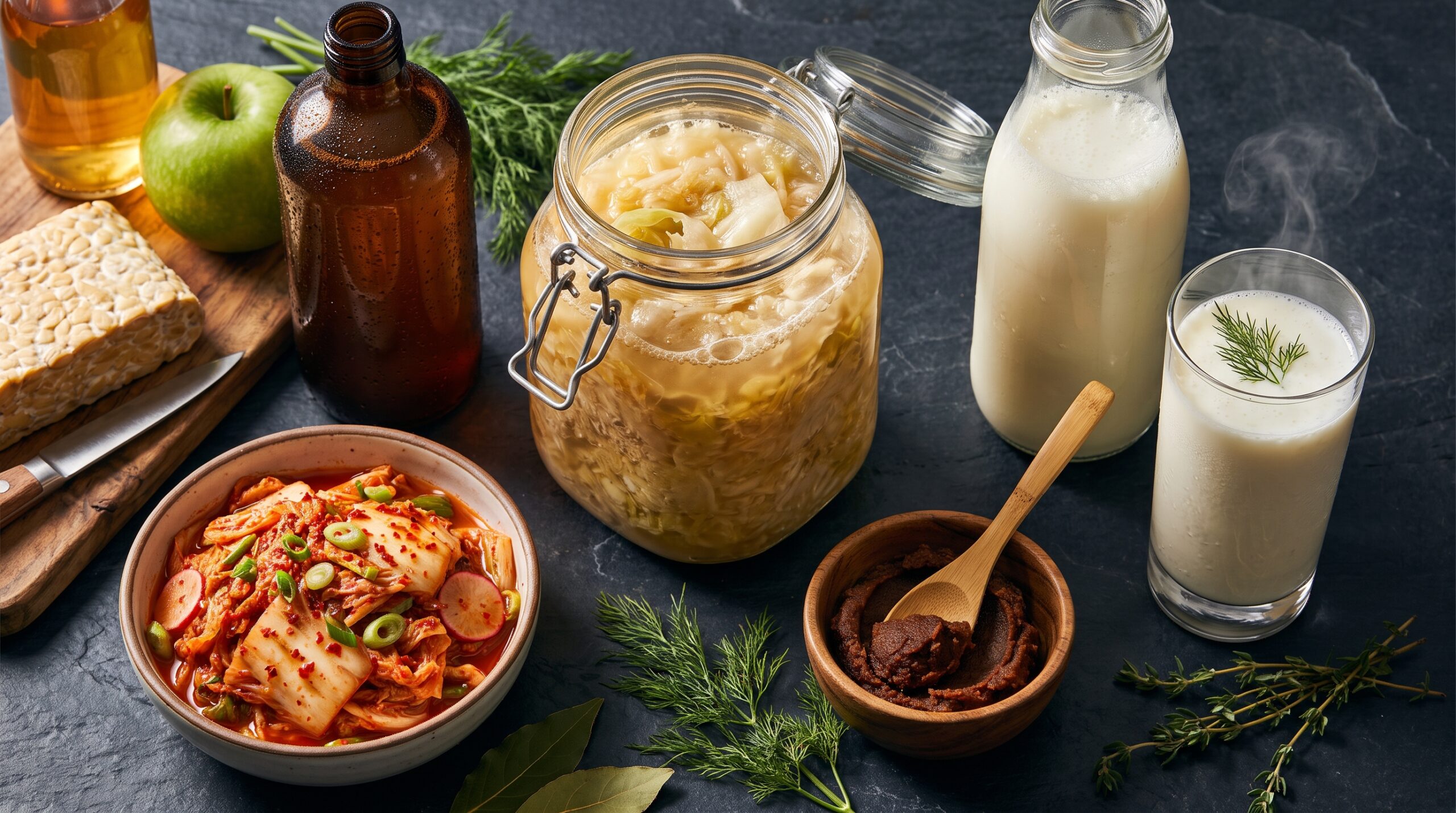
Fermented Foods for Gut Health: 10 Options to Add to Your Diet
There’s a quiet revolution happening in kitchens across America.
Jars of bubbling sauerkraut on countertops. Bottles of kefir in refrigerators next to the orange juice. Kimchi appearing on menus at restaurants that have nothing to do with Korean food. Kombucha filling entire refrigerator sections at grocery stores that didn’t stock it five years ago.
This isn’t a trend. It’s a correction.
For most of human history, fermented foods were a staple of virtually every food culture on earth — not because ancient peoples understood microbiology, but because fermentation was one of the only reliable ways to preserve food through winter. The lacto-fermentation process that makes sauerkraut shelf-stable for months also, it turns out, fills it with billions of beneficial bacteria that the human gut evolved alongside over thousands of years.
Modern food processing eliminated most of that. Pasteurization, refrigeration, and industrial food production removed fermented foods from the standard American diet over the course of about 50 years. The timing of that removal coincides, not coincidentally, with a dramatic rise in the rates of inflammatory diseases, autoimmune conditions, and digestive disorders.
We’re adding fermented foods back. And the research increasingly shows we were right to.
Quick Reference: 10 Fermented Foods at a Glance
| Food | Probiotic Type | Key Strains | Best For | Daily Serving |
|---|---|---|---|---|
| Sauerkraut | Bacterial | Lactobacillus plantarum | Microbiome diversity | 2–3 tbsp |
| Kefir | Bacterial + Yeast | 12+ strains | Comprehensive gut support | 1 cup |
| Kimchi | Bacterial | L. kimchii, L. plantarum | Diversity + anti-inflammatory | 2–4 tbsp |
| Yogurt | Bacterial | L. acidophilus, B. lactis | Beginners, daily use | 1 cup |
| Kombucha | Bacterial + Yeast | Acetobacter, S. boulardii | Gentle gut support | 4–8 oz |
| Miso | Bacterial + Fungal | Aspergillus oryzae | Gut + immune support | 1 tbsp |
| Tempeh | Bacterial + Fungal | Rhizopus oligosporus | Protein + gut health | 3–4 oz |
| Apple Cider Vinegar | Bacterial | Acetobacter | Digestion, stomach acid | 1 tbsp diluted |
| Kvass | Bacterial | L. fermentum | Gentle introduction | 4–6 oz |
| Water Kefir | Bacterial + Yeast | 30+ strains | Dairy-free alternative | 1 cup |
Why Fermented Foods Are Different From Probiotic Supplements
Before diving into the individual foods, it’s worth addressing the question people often ask: if I’m already taking a probiotic supplement, do I still need fermented foods?
The short answer is yes — and here’s why.
Probiotic supplements typically contain 1 to 34 bacterial strains, delivered in a single daily dose. Fermented foods contain a living, dynamic community of microorganisms — including strains that no supplement manufacturer has isolated or packaged — delivered in a food matrix that contains prebiotics, enzymes, organic acids, and other compounds that support bacterial survival and activity in the gut.
The Stanford University Cell study from 2021, which is the most rigorous dietary intervention study on this topic to date, found that a high-fermented-food diet produced significantly greater increases in gut microbiome diversity than even a high-fiber diet — and significantly reduced 19 inflammatory markers associated with chronic disease. These effects were observed with whole fermented foods, not supplements.
Supplements and fermented foods are complementary, not interchangeable. If you’re taking a quality probiotic and want to maximize results, adding fermented foods daily is the single most impactful additional step you can take.
For the science on probiotic supplements specifically, read: Best Probiotics for Bloating and Gas: Top 5 Picks That Actually Work
10 Fermented Foods for Gut Health — and How to Use Them
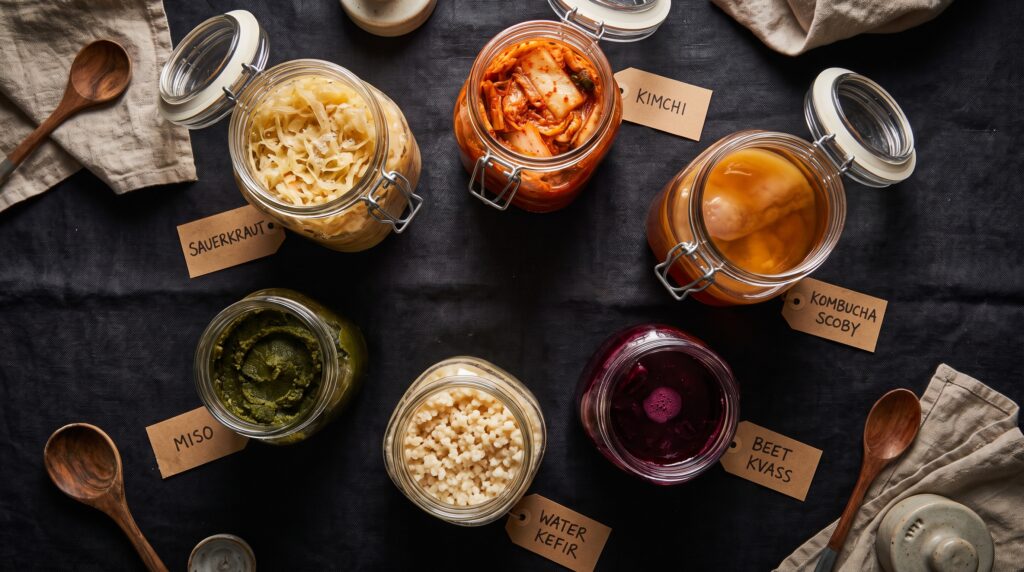
1. Sauerkraut
Sauerkraut — fermented cabbage — is arguably the most accessible and most studied lacto-fermented food available in the Western market. Its gut health benefits have been documented in research for decades, and its flavor profile integrates naturally into dozens of everyday meals.
The science: Traditional unpasteurized sauerkraut contains primarily Lactobacillus plantarum and related species, at concentrations ranging from 1.5 million to 10 billion CFU per gram depending on fermentation time and conditions. L. plantarum has specific published clinical evidence for reducing bloating, improving gut barrier integrity, and reducing gut inflammation.
A 2021 study in Frontiers in Microbiology found that regular consumption of traditionally fermented sauerkraut significantly altered gut microbiome composition toward more beneficial bacterial populations within 6 weeks, with parallel improvements in self-reported digestive symptoms.
The critical distinction you need to know: Pasteurized sauerkraut — the shelf-stable version in cans or regular jars — contains no live bacteria. The heat treatment that makes it shelf-stable kills the beneficial microorganisms. Only unpasteurized, refrigerated sauerkraut provides probiotic benefit. Look for it in the refrigerated section with a short ingredients list: cabbage, salt, nothing else.
How to use it: 2–3 tablespoons as a side dish alongside any protein, mixed into grain bowls, layered onto avocado toast, stirred into scrambled eggs, or eaten straight from the jar as a quick snack. The brine is also valuable — a tablespoon of sauerkraut brine before meals can support stomach acid production and digestion.
2. Kefir

If there is one fermented food with the broadest and most consistent body of scientific evidence for gut health, kefir is the strongest contender.
The science: Kefir is produced by fermenting milk (or water, or coconut milk) with kefir grains — a symbiotic culture of bacteria and yeasts that produces a drink containing 12 or more bacterial strains plus beneficial yeasts. The microbial diversity in kefir exceeds that of virtually any probiotic supplement on the market.
The Stanford Cell study specifically highlighted kefir as one of the primary contributors to the microbiome diversity increases and inflammation reductions observed in the fermented food group. A separate meta-analysis published in Nutrients in 2021 found that kefir consumption consistently improved gut microbiome composition, reduced inflammatory markers, and improved lactose digestion — even in people with lactose intolerance, because the fermentation process breaks down most of the lactose.
Kefir also contains kefiran — a unique polysaccharide produced specifically by kefir cultures — that has demonstrated gut lining protective effects in research, supporting tight junction integrity and reducing intestinal permeability.
How to use it: 1 cup daily is the research-supported dose. Drink plain in the morning, blend into smoothies, use as the liquid base for overnight oats, substitute for buttermilk in recipes, or use as a base for salad dressings. Full-fat, plain versions without added sugar are significantly better than flavored or low-fat varieties.
If dairy isn’t an option, water kefir provides similar microbial diversity without lactose — look for it in health food stores or make your own with water kefir grains.
3. Kimchi
Kimchi is the Korean fermented vegetable dish — most commonly made with napa cabbage, daikon, garlic, ginger, scallions, and gochugaru (Korean chili flakes) — and it may be the single most nutritionally complex fermented food on this list.
The science: Kimchi provides a synbiotic effect — probiotics and prebiotics delivered simultaneously. The fermentation produces primarily Lactobacillus kimchii and Lactobacillus plantarum, while the vegetables, garlic, and ginger provide prebiotic fiber, allicin, and gingerols that both feed beneficial bacteria and have direct anti-inflammatory effects.
A 2021 randomized controlled trial published in Beneficial Microbes assigned participants to either a kimchi-rich diet or a control diet for 4 weeks. The kimchi group showed significantly greater increases in gut microbiome diversity, significantly reduced inflammatory markers, and improved markers of gut barrier integrity compared to controls — effects that persisted for two weeks after the intervention ended.
Kimchi also contains significant quantities of vitamins C and K, beta-carotene, and capsaicin from the chili — making it one of the most nutrient-dense fermented foods available.
How to use it: 2–4 tablespoons as a side dish, in grain bowls, on tacos, in fried rice, alongside eggs, or in Korean-inspired dishes. Authentic kimchi has a short ingredients list without preservatives — find it refrigerated at Asian grocery stores or increasingly at mainstream supermarkets. If the heat level is challenging, start with white kimchi (baekkimchi), which is made without chili.
4. Plain Yogurt With Live Cultures
Yogurt is the most widely consumed fermented food in the United States — and when chosen correctly, it remains one of the most effective and accessible gut health foods available.
The science: The key phrase is “with live and active cultures” — a designation that indicates the yogurt wasn’t heat-treated after fermentation, meaning the beneficial bacteria are still alive and active. The most common strains in yogurt are Lactobacillus acidophilus, Lactobacillus bulgaricus, Streptococcus thermophilus, and Bifidobacterium lactis — all with published evidence for gut health support.
Research published in the American Journal of Clinical Nutrition found that daily yogurt consumption over 6 weeks significantly increased Bifidobacterium populations and reduced markers of gut inflammation in healthy adults. A separate study found that yogurt consumption was associated with reduced risk of type 2 diabetes — an effect researchers attributed partly to gut microbiome modulation.
The yogurt buying guide: Look for plain (not flavored), full-fat or 2%, with “live and active cultures” explicitly stated on the label. Greek yogurt is fine but has fewer live bacteria than regular yogurt due to the straining process. Avoid yogurts with added sugar, fruit syrups, or thickeners — the sugar counteracts the probiotic benefit. Siggi’s, Stonyfield Organic, and Nancy’s Probiotic are consistently reliable brands.
How to use it: 1 cup daily. Eat plain with fresh berries and a drizzle of honey, use as a base for overnight oats, substitute for sour cream in savory applications, blend into smoothies, or use as a dip base with herbs and garlic.
5. Kombucha
Kombucha is fermented tea — produced by fermenting sweetened black or green tea with a SCOBY (Symbiotic Culture Of Bacteria and Yeast) over 1–4 weeks. It’s become one of the fastest-growing beverage categories in the United States, which reflects both genuine interest in gut health and aggressive marketing.
The science — honest assessment: Kombucha’s probiotic content is more variable and generally lower than kefir, sauerkraut, or kimchi. The fermentation produces primarily Acetobacter and Gluconobacter species alongside Saccharomyces yeasts, but the concentration of live organisms varies significantly by brand, batch, and storage conditions. The organic acids produced during fermentation — primarily acetic acid and glucuronic acid — do have documented antimicrobial and liver-supportive properties.
A 2019 review in Comprehensive Reviews in Food Science and Food Safety concluded that kombucha has documented antimicrobial properties and moderate probiotic content, with promising but limited direct clinical evidence for human gut health outcomes compared to more studied fermented foods.
In other words: kombucha is beneficial, but it’s not a replacement for kefir or sauerkraut. Think of it as a gentle, enjoyable addition to a fermented food routine — not the centerpiece of it.
How to use it: 4–8 oz daily, ideally before a meal. Look for raw, unpasteurized kombucha with visible sediment (indicating live cultures). GT’s Living Foods and Health-Ade are consistently reliable brands. Be mindful of sugar content — some commercial kombuchas contain significant added sugar that undermines the benefit.
6. Miso

Miso is a fermented soybean paste — produced by fermenting soybeans with koji (Aspergillus oryzae) and salt, sometimes with added rice or barley — that has been a staple of Japanese cuisine for over a thousand years.
The science: Miso provides a unique combination of beneficial bacteria, digestive enzymes produced during fermentation, and bioactive peptides with antioxidant and anti-inflammatory properties. The koji fermentation also significantly increases the bioavailability of nutrients in the soybeans, including isoflavones and essential amino acids.
Research published in the Journal of Nutritional Science and Vitaminology found that regular miso consumption was associated with significantly better gut microbiome diversity and lower inflammatory markers compared to non-consumers, independent of other dietary factors.
An important note: miso must not be boiled. High heat destroys the beneficial bacteria and enzymes. Add miso to soups after removing from heat, or use in dressings and marinades at room temperature.
How to use it: 1 tablespoon per serving. Dissolve in warm (not boiling) water or broth for miso soup, whisk into salad dressings with tahini and rice vinegar, use as a marinade for fish or tofu, or spread thinly on toast with avocado.
7. Tempeh

Tempeh is fermented soybeans — whole beans bound together by Rhizopus oligosporus mold into a firm, sliceable cake — originating from Indonesia, where it has been a dietary staple for centuries.
The science: The fermentation process significantly alters the nutritional profile of soybeans. It reduces phytic acid (which inhibits mineral absorption), increases protein digestibility, produces vitamin B12 (rare in plant foods), and creates a range of bioactive compounds with anti-inflammatory and antioxidant properties.
Tempeh also contains significant quantities of prebiotic fiber that survives digestion and reaches the colon to feed beneficial bacteria — making it a synbiotic food (providing both pre and probiotic benefits) like kimchi.
Research published in Nutrients found that tempeh consumption significantly increased Bifidobacterium and Lactobacillus populations over 8 weeks in adults with low baseline gut microbiome diversity — with parallel improvements in markers of gut barrier integrity.
How to use it: 3–4 oz per serving. Slice and pan-fry in olive oil with tamari and garlic for a savory protein, crumble into grain bowls, use as a meat substitute in tacos or stir-fries, or marinate and bake. Look for organic, non-GMO tempeh in the refrigerated section.
8. Apple Cider Vinegar (Raw, With the Mother)
Apple cider vinegar occupies a complicated position in the gut health conversation — somewhere between genuine evidence and significant overhype. The distinction matters.
The science — what’s real: Raw, unfiltered apple cider vinegar “with the mother” contains Acetobacter bacteria and a range of organic acids — primarily acetic acid — that have documented antimicrobial properties and may support stomach acid production in people with low stomach acid (hypochlorhydria). The prebiotic pectin from the apples also survives the fermentation process in small amounts.
What’s overhyped: Claims that ACV directly introduces significant quantities of beneficial bacteria to the gut are not well-supported. The probiotic content is modest compared to kefir, sauerkraut, or kimchi. Its primary gut health value is in supporting digestion — particularly stomach acid production and antimicrobial activity — rather than directly populating the microbiome.
How to use it: 1 tablespoon diluted in 8 oz of water, consumed 15–20 minutes before your largest meal. Never drink undiluted — the acidity can damage tooth enamel and esophageal tissue. Bragg Organic Apple Cider Vinegar is the most reliably “with the mother” option widely available.
9. Kvass
Kvass is a traditional Eastern European fermented beverage — most commonly made from fermented rye bread — that has been consumed for gut health and hydration for centuries but remains relatively unknown outside its regions of origin.
The science: Kvass provides primarily Lactobacillus fermentum and related species, along with B vitamins produced during fermentation and a gentle level of organic acids. Its probiotic content is lower than kefir or sauerkraut, but its mild flavor and very low alcohol content (less than 1%) make it an accessible introduction to fermented beverages for people who find kombucha or kefir too strong.
How to use it: 4–6 oz as a beverage, particularly as a digestive after meals. Beet kvass — made from fermented beets rather than bread — is increasingly available in health food stores and has a more concentrated nutritional profile including significant quantities of betalains with anti-inflammatory properties.
10. Water Kefir
Water kefir is produced by fermenting sugar water or coconut water with water kefir grains — a different culture from milk kefir grains — producing a lightly effervescent, mildly sweet probiotic beverage that contains 30 or more bacterial and yeast strains.
The science: Water kefir provides similar microbial diversity to milk kefir without any dairy, making it the most comprehensive dairy-free probiotic food option available. Research on water kefir is less extensive than on milk kefir, but the microbial profile — dominated by Lactobacillus and Leuconostoc species alongside Saccharomyces and other yeasts — is well-characterized and consistent with documented probiotic benefits.
How to use it: 1 cup daily as a beverage, chilled. Available in some health food stores or easily made at home with water kefir grains (widely available online). Coconut water kefir is a particularly nutrient-rich variant that also provides electrolytes.
How to Build Fermented Foods Into Your Routine
Understanding the science is one thing. Actually eating fermented foods consistently every day is another — and consistency is what produces results.
The most effective approach is to anchor fermented foods to meals you already eat reliably.
Breakfast anchor: Overnight oats made with kefir instead of milk. This one substitution takes zero extra time and adds a full serving of the most probiotic-rich fermented food available. If you eat yogurt for breakfast, you’re already here.
Lunch anchor: A tablespoon or two of sauerkraut alongside whatever protein you’re eating. Sauerkraut pairs naturally with virtually any savory food — eggs, chicken, fish, grain bowls, sandwiches.
Dinner anchor: Kimchi as a side dish three to four nights per week. Two tablespoons is sufficient. It adds flavor as much as gut benefit.
Beverage swap: Replace one daily beverage with kombucha or water kefir. Not in addition to everything else — in place of a juice, soda, or flavored drink you’d otherwise have.
This approach — three to four touchpoints of fermented food across the day — is what the research supports and what consistently produces measurable microbiome improvements within 4–6 weeks.
For the complete dietary framework that maximizes the benefit of fermented foods, read: Gut Health Diet Plan for Beginners: A Complete 7-Day Guide
A Note on Starting Slowly
If you’ve never regularly eaten fermented foods, start with one serving of one food — not all ten simultaneously.
When beneficial bacteria arrive in a gut that’s been depleted of them, they compete with established bacterial populations for space and resources. This competition produces gas as a byproduct — which temporarily increases bloating and discomfort for some people. This is a sign that things are changing, not that something is wrong.
Starting with a single tablespoon of sauerkraut or a quarter cup of kefir and increasing gradually over two to three weeks allows your gut to adapt without the temporary discomfort that can cause people to abandon fermented foods prematurely.
If bloating is already a significant issue for you, read: Why Am I Always Bloated? 8 Real Causes and Natural Remedies
The Bottom Line
Fermented foods are not a wellness trend. They are an ancient dietary practice that modern food processing removed from our diets within a single generation — and that removal appears to have had measurable consequences for gut health and, through it, for systemic health.
The ten foods in this guide represent the most accessible and best-evidenced fermented options available to the American consumer today. You don’t need all ten. Starting with two or three — kefir in the morning, sauerkraut at lunch or dinner, kimchi a few nights a week — and building from there is enough to produce meaningful gut microbiome improvements within four to six weeks.
Your microbiome evolved alongside these foods for thousands of years. Adding them back is one of the most natural things you can do for your gut.
💊 Want to accelerate your results? Combining fermented foods with a quality probiotic supplement produces significantly faster microbiome improvements than either approach alone. See Will Silva’s top probiotic recommendation on Amazon
→ Also read: 15 Foods That Heal Your Gut and Reduce Inflammation
→ Also read: 10 Signs You Have an Unhealthy Gut (And How to Fix It)
Frequently Asked Questions
Q: How much fermented food should I eat per day for gut health benefits? A: Research suggests that meaningful gut health benefits occur with two to three servings of fermented foods daily — roughly one cup of kefir or yogurt, two to three tablespoons of sauerkraut or kimchi, and four to eight ounces of kombucha. Consistency across the week matters more than the amount on any single day.
Q: Can I eat fermented foods if I have histamine intolerance? A: Fermented foods are high in histamine, which can be problematic for people with histamine intolerance or mast cell activation syndrome. If you react to fermented foods with headaches, flushing, hives, or digestive discomfort, histamine intolerance may be the cause. Consult with a healthcare provider before increasing fermented food consumption if this applies to you.
Q: Is store-bought fermented food as good as homemade? A: It depends on the product. Unpasteurized, refrigerated sauerkraut and kimchi from quality producers can be comparable to homemade. Kefir made at home from kefir grains is generally more probiotic-rich than commercial versions. Kombucha quality varies significantly by brand. Homemade fermented foods, when made correctly, are typically superior — but quality commercial options are a practical and effective alternative.
Q: Can children eat fermented foods? A: Yes — fermented foods are generally appropriate and beneficial for children. Plain yogurt, mild kefir, and small amounts of unpasteurized sauerkraut are all suitable for children over one year of age. Introduce gradually and observe for any digestive response, as with adults.
Q: How do I know if fermented food has gone bad versus just being fermented? A: Properly fermented foods have a tangy, sour smell from lactic acid — this is normal and desirable. Signs of spoilage include fuzzy mold (other than the kahm yeast that sometimes forms on sauerkraut surfaces, which is harmless), pink or unusual discoloration, or a putrid rather than sour smell. When in doubt with a commercial product, check the expiration date and refrigeration status.
References & Further Reading
- Wastyk HC, et al. “Gut-microbiota-targeted diets modulate human immune status.” Cell, 2021.
- Bourrie BC, et al. “The Microbiota and Health Promoting Characteristics of the Fermented Beverage Kefir.” Frontiers in Microbiology, 2016.
- Dimidi E, et al. “Fermented foods: definitions and characteristics, impact on the gut microbiota and effects on gastrointestinal health and disease.” Nutrients, 2019.
- Marco ML, et al. “Health benefits of fermented foods: microbiota and beyond.” Current Opinion in Biotechnology, 2017.
- Hill C, et al. “Expert consensus document: The International Scientific Association for Probiotics and Prebiotics consensus statement on the scope and appropriate use of the term probiotic.” Nature Reviews Microbiology, 2014.
This article is for informational purposes only and does not constitute medical advice. Always consult a qualified healthcare professional for personal health concerns.



One Comment