How to Lose Belly Fat by Healing Your Gut (What the Science Shows)
If you’ve been doing everything right — eating less, moving more, skipping dessert — and your belly still won’t budge, you’re not alone. And you’re probably not doing anything wrong.
You might just be missing the one variable that most weight loss advice never talks about.
In 2026, with over half of Americans actively trying to lose weight, the conversation is finally starting to catch up to what the science has been showing for years: belly fat isn’t just a calorie problem. It’s a gut problem. The trillions of bacteria living in your digestive tract directly regulate how your body stores fat, how efficiently you burn calories, how inflamed your metabolic environment is, and whether your hunger hormones are working for you or against you.
This isn’t about replacing diet and exercise. It’s about adding the missing layer that makes diet and exercise actually work — particularly for the stubborn fat that sits around the midsection and refuses to respond to conventional approaches.
Here’s what the research shows, and what to do about it.
Quick Reference: Gut Microbiome and Belly Fat
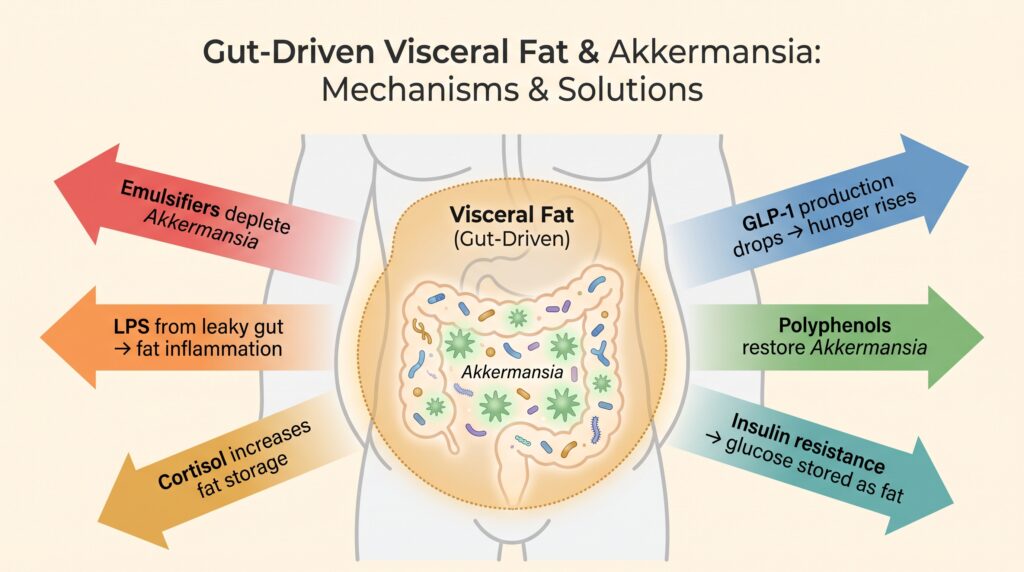
| Mechanism | How It Drives Belly Fat | How to Fix It |
|---|---|---|
| Firmicutes/Bacteroidetes imbalance | Extracts more calories from same food | Increase plant diversity, reduce processed food |
| Low Akkermansia muciniphila | Weakens gut barrier, promotes fat storage | Polyphenol-rich foods, reduce emulsifiers |
| Elevated LPS from leaky gut | Drives visceral fat inflammation | Heal gut lining, reduce alcohol |
| Disrupted GLP-1 production | Blunts satiety signals after meals | Fermented foods, prebiotic fiber |
| Dysbiosis-driven cortisol | Promotes abdominal fat deposition | Stress management, sleep consistency |
| Insulin resistance from gut inflammation | Directs glucose to fat storage | Omega-3s, diverse plants, reduce sugar |
Why Belly Fat Is Different From Other Body Fat
Not all fat behaves the same way. The fat that accumulates around your abdomen — what researchers call visceral fat — sits deep inside the abdominal cavity, surrounding your liver, pancreas, and intestines. Unlike subcutaneous fat (the fat you can pinch under your skin), visceral fat is metabolically active. It produces inflammatory cytokines, disrupts insulin signaling, and contributes directly to the systemic inflammation that drives metabolic syndrome, cardiovascular disease, and type 2 diabetes.
It’s also the fat most tightly linked to gut health — which is why it tends to be the most resistant to conventional calorie restriction and the most responsive to gut-targeted interventions.
A 2021 study published in Cell Metabolism found that visceral fat accumulation was significantly predicted by gut microbiome composition — independently of total caloric intake, BMI, and activity level. People with higher gut microbial diversity had significantly less visceral fat than those with lower diversity, even when eating the same number of calories.
If you’re doing everything “right” and still carrying excess belly fat, your gut microbiome deserves serious attention.
6 Ways Your Gut Microbiome Drives Belly Fat
1. It Determines How Many Calories You Actually Absorb
This is the mechanism that challenges the most basic assumption of calorie counting — and it starts in the gut.
When you eat, your gut bacteria ferment the food your own digestive enzymes can’t process — particularly dietary fiber and complex carbohydrates. In the process, they extract additional calories and produce short-chain fatty acids. How efficiently this happens depends entirely on which bacteria are present.
Research has consistently shown that people with higher proportions of Firmicutes bacteria relative to Bacteroidetes extract significantly more calories from identical food than those with the reverse ratio. The landmark twin study published in Science estimated that microbiome-driven differences in caloric absorption can account for 150–200 additional calories per day — enough to produce 15 to 20 pounds of fat accumulation per year from the microbiome alone, before diet or exercise are even considered.
Two people eating the exact same meal. One gut stores more of it as fat. The microbiome is the difference.
2. It Regulates Your Body’s Natural GLP-1 Production
GLP-1 — glucagon-like peptide-1 — is the hormone that weight loss drugs like Ozempic and Wegovy are designed to mimic. It signals fullness to the brain, slows gastric emptying, reduces appetite, and improves insulin sensitivity.
Here’s what most people don’t know: your gut produces GLP-1 naturally. Specific bacteria — particularly Akkermansia muciniphila and Bifidobacterium species — directly stimulate GLP-1 production in gut cells called L-cells. When these bacteria are depleted by processed food, antibiotics, or chronic stress, GLP-1 production decreases — and your body loses one of its most powerful natural mechanisms for appetite regulation and fat metabolism.
A 2019 study in Nature Medicine found that transplanting gut microbiota from lean donors into people with metabolic syndrome improved GLP-1 levels and insulin sensitivity within 6 weeks — without any change in diet or medication. The microbiome shift alone restored part of the hormonal machinery that regulates body weight.
This is why gut health represents a genuine natural alternative to pharmaceutical GLP-1 drugs for people with dysbiosis-driven appetite dysregulation — not by injecting a synthetic hormone, but by restoring the gut environment where your body’s own GLP-1 is produced.
3. It Drives the Gut Inflammation Behind Visceral Fat
This mechanism is the most direct link between gut health and belly fat specifically — and the least understood by most people pursuing weight loss.
When gut dysbiosis leads to leaky gut, bacterial fragments called lipopolysaccharides (LPS) from gram-negative bacteria enter the bloodstream. Your immune system mounts an inflammatory response to these fragments — a response that is chronic, low-grade, and particularly concentrated around the visceral fat tissue that surrounds your organs.
Research has shown that visceral fat is uniquely sensitive to this gut-derived inflammatory signaling. Visceral fat cells have high concentrations of LPS receptors (TLR4), meaning they respond directly to circulating bacterial fragments by increasing fat storage, impairing fat mobilization, and amplifying local inflammation. This creates a self-reinforcing cycle: gut-derived inflammation promotes visceral fat accumulation, and visceral fat itself produces more inflammatory cytokines that further disrupt gut barrier function.
Breaking this cycle requires healing the gut barrier first — reducing the LPS leakage that’s activating the visceral fat inflammatory response.
4. It Controls Your Hunger and Fullness Hormones
Beyond GLP-1, your gut microbiome influences the full orchestra of appetite-regulating hormones — and dysbiosis throws that orchestra significantly out of tune.
Ghrelin, your primary hunger hormone, is elevated in people with gut dysbiosis — meaning a disrupted microbiome keeps you feeling genuinely hungrier more of the time. Leptin resistance — in which your brain stops responding to the satiety signal from leptin — is associated with gut inflammation and dysbiosis. PYY (peptide YY), another fullness hormone produced in the gut, is reduced when beneficial bacterial populations are depleted.
The practical consequence: if your gut is imbalanced, you’re fighting your own hormonal environment every time you try to eat less. Hunger is real and more intense. Fullness comes later and fades faster. Cravings are stronger — particularly for the high-sugar, high-fat foods that the dysbiotic bacteria are literally producing chemical signals requesting.
This is not lack of willpower. It’s a gut microbiome that has created a physiological environment hostile to sustainable calorie reduction.
5. It Affects Insulin Sensitivity and Fat Storage Decisions
Insulin resistance — the condition in which cells become less responsive to insulin — is both a driver and a consequence of visceral fat accumulation. The gut microbiome plays a direct role in its development.
Short-chain fatty acids produced by beneficial gut bacteria, particularly butyrate and propionate, directly improve insulin sensitivity by activating specific cell receptors and reducing hepatic glucose production. When beneficial bacteria producing these SCFAs are depleted, insulin sensitivity worsens — and glucose that would otherwise be used for energy is directed toward fat storage instead.
A 2022 study in Cell Host & Microbe found that microbiome composition predicted insulin resistance scores more accurately than dietary fat intake alone — suggesting that gut health is a more fundamental driver of metabolic dysfunction than the specific macronutrient composition of the diet.
6. It Regulates Cortisol — The Belly Fat Hormone
Cortisol — your primary stress hormone — preferentially deposits fat in the abdominal region. It’s the reason chronic stress reliably produces belly fat even in people who aren’t overeating, and it’s why stress management is as important as dietary change in any serious approach to reducing visceral fat.
The gut-cortisol connection runs through the HPA axis — the hypothalamic-pituitary-adrenal axis — which regulates the stress response. Research has shown that gut microbiome composition directly modulates HPA axis reactivity. A diverse, balanced microbiome produces a more calibrated cortisol response. A dysbiotic gut produces an exaggerated one — meaning the same life stressors produce more cortisol in a person with gut dysbiosis than in a person with a balanced microbiome.
Additionally, a 2022 study published in Psychoneuroendocrinology found that gut microbiome diversity was inversely associated with cortisol output in response to psychological stress — with lower diversity predicting higher cortisol reactivity and, over time, greater visceral fat accumulation.
The Akkermansia Factor: The Belly Fat Bacteria You’ve Never Heard Of
Akkermansia muciniphila deserves special attention in any discussion of gut health and belly fat, because the research on this single bacterial species is among the most compelling in the field.
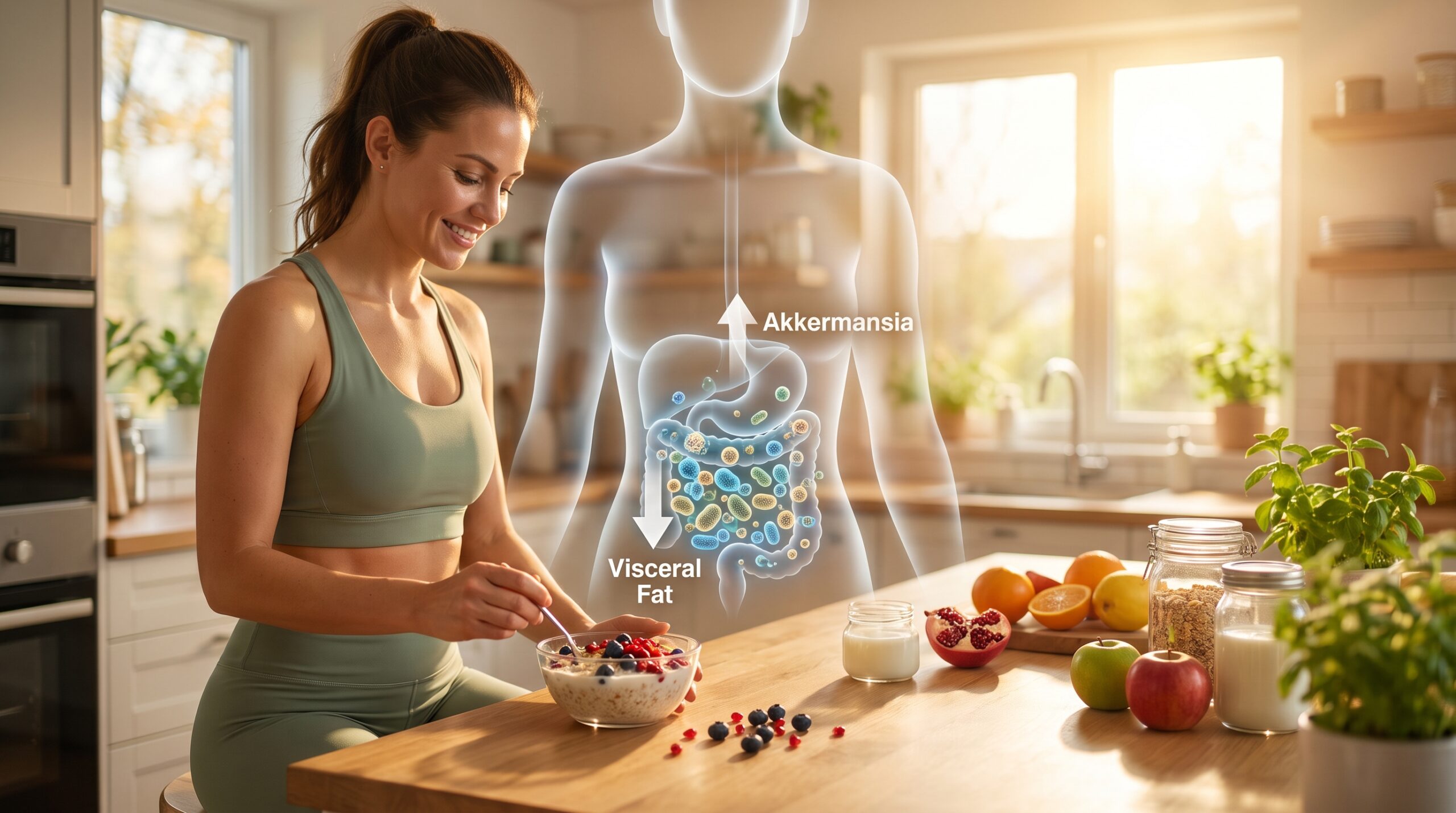
Akkermansia is consistently depleted in people with obesity, metabolic syndrome, and type 2 diabetes. It’s associated with gut barrier integrity, reduced visceral fat, improved insulin sensitivity, and — critically — enhanced natural GLP-1 production. In animal studies, supplementation with Akkermansia reversed obesity and metabolic dysfunction independent of diet. In human trials, pasteurized Akkermansia supplementation produced significant improvements in metabolic markers including insulin sensitivity and visceral fat distribution.
What depletes Akkermansia most aggressively? Emulsifiers — the additives (polysorbate 80, carboxymethylcellulose, carrageenan) found in almost every packaged food. A 2015 study in Nature found that common dietary emulsifiers directly reduced Akkermansia populations and promoted metabolic syndrome in animal models. This is the gut mechanism by which ultra-processed food drives belly fat — not just through caloric density, but by specifically depleting the bacteria that protect against visceral fat accumulation.
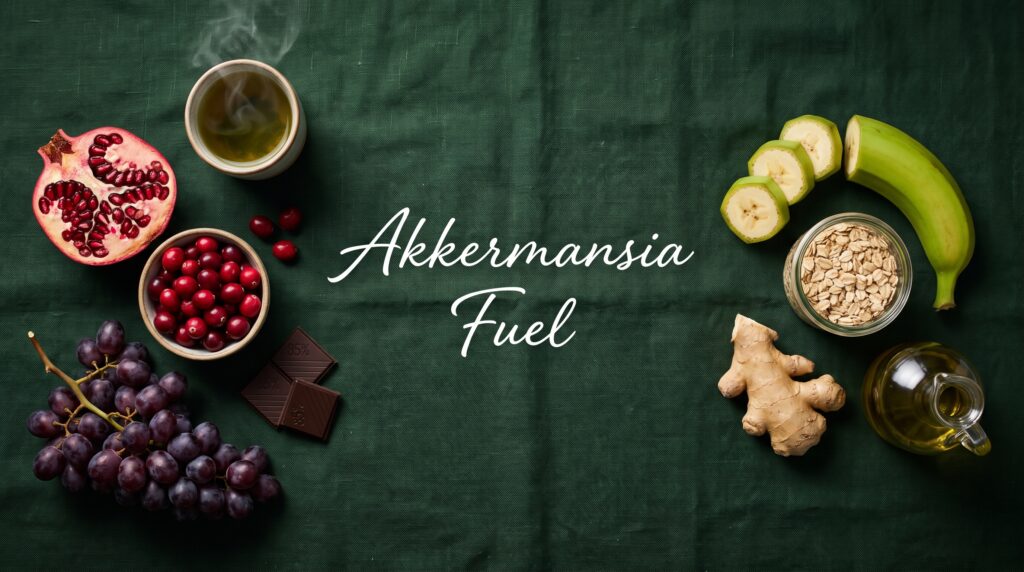
What restores Akkermansia? Polyphenol-rich foods are the most evidence-backed approach: pomegranate extract, cranberry, grape skin, green tea catechins, and dark chocolate. Prebiotic fiber — particularly the mucin-feeding resistant starches in green bananas and oats — also supports Akkermansia populations. And critically: removing emulsifier-containing ultra-processed foods from the diet allows Akkermansia to naturally rebound.
What to Eat to Target Belly Fat Through the Gut
The dietary approach with the strongest evidence for reducing visceral fat through gut mechanisms combines five elements.
High-polyphenol foods daily. Blueberries, pomegranate, green tea, dark chocolate (85%+), and extra virgin olive oil provide the polyphenols that feed Akkermansia and reduce gut-derived inflammation. Aim for three to four different polyphenol sources per day, not the same one repeatedly.
Fermented foods twice daily. Kefir and sauerkraut provide the live cultures that restore GLP-1-stimulating bacterial populations and directly compete with the Firmicutes overgrowth associated with excess calorie extraction. Daily fermented food consumption is more powerful for visceral fat reduction than probiotic supplements alone, according to the Stanford Cell study.
Diverse plant fiber — targeting 30 different plants per week. This is the single dietary change with the most consistent evidence for improving microbial diversity — and microbial diversity is the strongest predictor of healthy visceral fat levels in the research. Rotating vegetables, fruits, legumes, grains, nuts, and seeds across the week feeds the widest range of beneficial bacteria and progressively reduces Firmicutes dominance.
Omega-3 fatty acids. Wild-caught salmon, sardines, mackerel, and high-quality fish oil directly reduce gut-derived inflammation and have specific evidence for reducing visceral fat. A 2021 meta-analysis in Obesity Reviews found that omega-3 supplementation significantly reduced visceral fat area — independent of total caloric intake.
Eliminate emulsifiers and ultra-processed food. Not just for caloric reasons — for Akkermansia reasons. The single most impactful dietary change for restoring the gut bacteria most associated with reduced visceral fat is removing the emulsifiers that actively deplete them.
The Gut-Belly Fat Reset Protocol

Based on the mechanisms above, here’s a practical protocol specifically targeting visceral fat through gut health:
Morning routine: Start with a glass of water before eating. Take five grams of L-glutamine dissolved in water on an empty stomach to support gut lining repair. Breakfast of overnight oats made with kefir (fermented food + prebiotic fiber in one meal), topped with blueberries and pomegranate seeds (Akkermansia-supporting polyphenols), and a green banana sliced in (resistant starch for butyrate-producing bacteria).
Throughout the day: Two to three tablespoons of sauerkraut or kimchi at lunch or dinner. Three to four different polyphenol sources spread across meals. A cup of green tea in the afternoon instead of a mid-afternoon snack. Wild-caught salmon at least twice this week. Extra virgin olive oil as your primary fat for cooking and dressing.
What to remove: Ultra-processed foods containing emulsifiers — check ingredient labels for polysorbate 80, carrageenan, carboxymethylcellulose. Refined sugar and alcohol, which both deplete Akkermansia and promote Firmicutes overgrowth. Seed oils (canola, soybean, corn), which promote the gut inflammatory environment that drives visceral fat.
Supplement support: A quality multi-strain probiotic supports the microbiome shifts this dietary protocol initiates. L-glutamine repairs the gut lining to reduce LPS-driven visceral fat inflammation. Omega-3s provide targeted anti-inflammatory support.
💊 Editor’s Pick: Will Silva’s top probiotic recommendation on Amazon (affiliate link — independently researched)
Sleep and stress: Cortisol-driven belly fat doesn’t respond to diet alone. Seven to nine hours of consistent sleep timing (same bedtime and wake time daily) directly reduces cortisol reactivity through the gut-HPA axis. Ten minutes of daily diaphragmatic breathing has measurable effects on cortisol and gut motility — both directly relevant to visceral fat reduction.
Realistic Timeline for Gut-Targeted Belly Fat Reduction
The timeline for gut-driven belly fat reduction is different from conventional caloric restriction — and understanding this prevents the frustration that causes people to abandon the approach before results appear.
Weeks 1–2: Gut inflammation begins to reduce as emulsifiers, refined sugar, and alcohol are removed. Bloating decreases noticeably. Scale weight may not change, but abdominal distension often reduces — clothes fit differently even before fat loss has occurred.
Weeks 3–6: Microbiome composition begins to shift meaningfully. GLP-1 production improves. Hunger becomes more manageable — not through willpower, but because the hormonal signaling is functioning better. Some people begin to lose abdominal fat in this window, particularly if other dietary improvements are concurrent.
Months 2–4: Akkermansia populations, which require consistent prebiotic feeding and emulsifier removal over several weeks to meaningfully rebound, begin to improve gut barrier integrity and reduce the visceral fat inflammatory signaling that was maintaining fat storage. This is typically the window when people notice sustained, consistent reduction in abdominal circumference rather than day-to-day fluctuation.
Beyond 4 months: The metabolic improvements — better insulin sensitivity, improved GLP-1 function, lower cortisol reactivity, reduced gut-derived inflammation — create a fundamentally different metabolic environment. Weight management becomes less effortful because the gut ecosystem is no longer actively working against it.
The Bottom Line
Belly fat is not purely a calorie problem. In a significant proportion of people who struggle with stubborn abdominal fat despite consistent dietary effort, gut microbiome imbalance is a primary driver — creating the inflammatory environment, hormonal disruption, and caloric extraction inefficiency that makes conventional approaches frustratingly ineffective.
The gut-targeted approach doesn’t replace healthy eating and regular movement. It fixes the underlying biological environment that determines whether those efforts actually produce results.
Restore Akkermansia with polyphenol-rich foods. Rebuild GLP-1 production with fermented foods and prebiotic fiber. Reduce gut-derived visceral fat inflammation by removing emulsifiers and healing the gut lining. Manage cortisol through sleep and stress practices.
Your microbiome didn’t create your belly fat overnight. Changing it takes weeks to months of consistent inputs. But it’s among the highest-leverage interventions available for people who have already tried everything else.
→ Read next: Gut Health and Weight Loss: The Surprising Connection
→ Also read: How to Do a Gut Reset in 30 Days (The Right Way)
Frequently Asked Questions
Q: Can gut health changes really reduce belly fat? A: Yes — through multiple documented mechanisms including improved caloric extraction efficiency, restored GLP-1 production, reduced gut-derived inflammation that drives visceral fat accumulation, and improved insulin sensitivity. The research is specific: gut microbiome composition predicts visceral fat levels independently of total caloric intake.
Q: What is the fastest way to reduce belly fat through gut health? A: The fastest results come from simultaneously removing Akkermansia-depleting emulsifiers and ultra-processed food while adding polyphenol-rich foods and fermented foods daily. Most people notice reduced abdominal bloating within one to two weeks, with genuine visceral fat reduction developing over two to four months of consistent implementation.
Q: Is fixing gut health better than Ozempic for belly fat? A: They work through different mechanisms and aren’t directly comparable. GLP-1 drugs produce faster and more dramatic appetite suppression for most people. Gut health interventions produce slower but more foundational metabolic improvements — and don’t carry the side effects, cost, or rebound risk associated with stopping medication. For people with significant gut dysbiosis, the gut approach may be more sustainable long-term.
Q: What probiotic is best for belly fat? A: Probiotics with Lactobacillus gasseri and Bifidobacterium breve have the most specific published evidence for visceral fat reduction. Multi-strain formulas that include these alongside other Lactobacillus and Bifidobacterium species provide the broadest microbiome support for metabolic health.
Q: Does stress really cause belly fat through the gut? A: Yes — through the gut-HPA axis connection. Chronic stress elevates cortisol, which preferentially deposits fat abdominally. A dysbiotic gut amplifies cortisol reactivity, meaning gut imbalance makes the same stressors produce more belly-fat-promoting cortisol. Addressing both gut health and stress simultaneously produces better results than targeting either alone.
References & Further Reading
- Ridaura VK, et al. “Gut microbiota from twins discordant for obesity modulate metabolism in mice.” Science, 2013.
- Plovier H, et al. “A purified membrane protein from Akkermansia muciniphila or the pasteurized bacterium improves metabolism in obese and diabetic mice.” Nature Medicine, 2019.
- Chassaing B, et al. “Dietary emulsifiers impact the mouse gut microbiota promoting colitis and metabolic syndrome.” Nature, 2015.
- Kootte RS, et al. “Improvement of Insulin Sensitivity after Lean Donor Feces in Metabolic Syndrome.” Cell Metabolism, 2017.
- Koh A, et al. “From dietary fiber to host physiology: short-chain fatty acids as key bacterial metabolites.” Cell, 2016.
- Liu Z, et al. “Gut microbiome and serum metabolome alterations in obesity and after weight-loss intervention.” Nature Medicine, 2017.
This article is for informational purposes only and does not constitute medical advice. Always consult a qualified healthcare professional for personal health and weight management concerns.