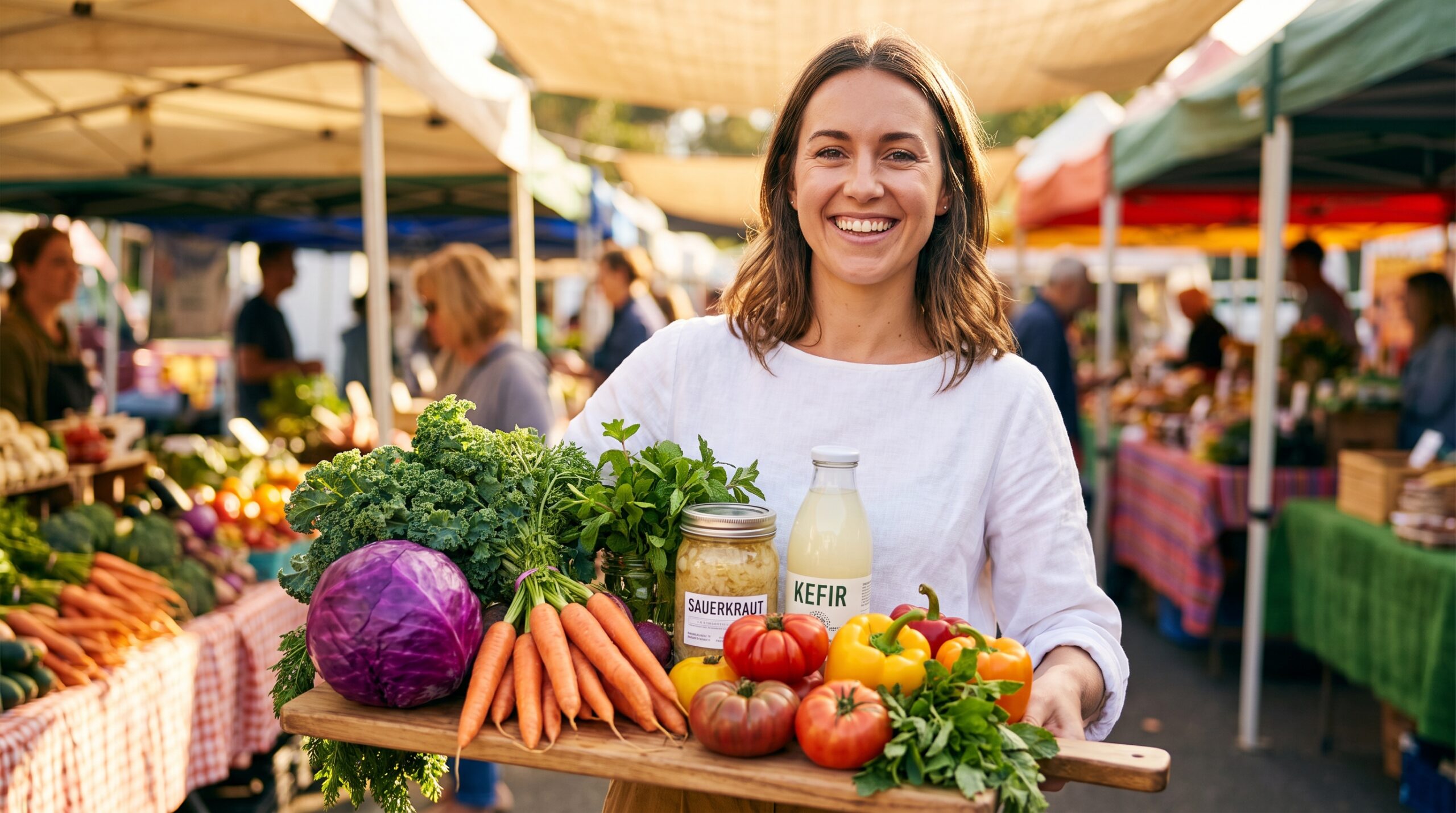
How to Improve Your Gut Microbiome Naturally (7 Proven Ways)
Your gut microbiome is one of the most dynamic ecosystems on the planet — and one of the most responsive to change.
Unlike your genetics, your bone structure, or your height, your microbiome can shift meaningfully within days of changing what you eat, how you sleep, or how you manage stress. That’s not a marketing claim. It’s one of the most consistently replicated findings in modern microbiome research.
The flip side is also true: it can deteriorate just as quickly.
Most people think improving gut health means taking a probiotic and calling it done. The reality is more interesting — and more actionable. Your microbiome responds to a specific set of inputs, and when you understand what those are, you have far more control over your gut health than you might think.
Here are 7 proven, science-backed ways to improve your gut microbiome naturally — starting today.
Quick Reference: 7 Methods at a Glance
| # | Method | Timeline to Notice Effects | Difficulty |
|---|---|---|---|
| 1 | Eat diverse plant foods | 3–5 days | Easy |
| 2 | Add fermented foods daily | 1–3 weeks | Easy |
| 3 | Take a quality probiotic | 2–4 weeks | Easy |
| 4 | Prioritize prebiotic fiber | 1–2 weeks | Easy |
| 5 | Reduce ultra-processed foods | 3–7 days | Moderate |
| 6 | Manage stress actively | 2–4 weeks | Moderate |
| 7 | Fix your sleep schedule | 1–2 weeks | Moderate |
Why Your Gut Microbiome Needs Active Support
Before we get into the methods, it helps to understand what you’re actually working with.
Your gut microbiome is a community of approximately 100 trillion microorganisms — bacteria, fungi, viruses, and archaea — living primarily in your large intestine. The diversity and balance of this community determines, to a remarkable degree, how well your body functions.
A diverse microbiome — one with many different species of beneficial bacteria — is associated with better digestion, stronger immunity, more stable mood, clearer thinking, and healthier body weight. A low-diversity microbiome — dominated by a smaller number of species, often with an overgrowth of harmful ones — is associated with virtually every chronic disease studied in modern medicine, from inflammatory bowel disease to type 2 diabetes to depression.
The critical insight from recent research: diversity is the goal. Not just more bacteria, but more different kinds of bacteria.
Research published in Cell in 2022 found that dietary diversity was the single strongest predictor of microbiome diversity — more than genetics, age, or geography. What you eat matters more than almost any other factor in your control.
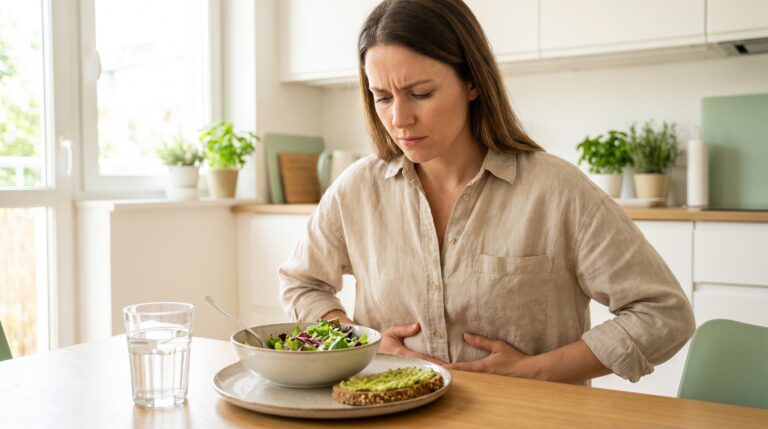
If you’ve been experiencing symptoms like chronic bloating, fatigue, brain fog, food intolerances, or persistent skin issues, your microbiome may be significantly out of balance. Read: 10 Signs You Have an Unhealthy Gut (And How to Fix It)
7 Proven Ways to Improve Your Gut Microbiome Naturally
1. Eat 30 Different Plant Foods Per Week
This is the single most impactful dietary change you can make for your microbiome — and it’s probably not what you expected.
The landmark American Gut Project, one of the largest microbiome studies ever conducted with data from over 10,000 participants, found that people who ate 30 or more different plant foods per week had significantly more diverse gut microbiomes than those who ate 10 or fewer. The difference in microbial diversity was greater than almost any other factor studied, including whether participants were vegans, vegetarians, or omnivores.
The mechanism is straightforward: different plant fibers feed different species of gut bacteria. When you eat a wider variety of plants, you’re feeding a wider variety of beneficial microbes — and diversity begets diversity.
Thirty sounds like a lot until you realize it includes everything from herbs and spices to nuts and seeds. Here’s what counts:
Every vegetable is a separate plant food. Every fruit is separate. Whole grains (oats, quinoa, brown rice, barley) each count individually. Legumes (black beans, lentils, chickpeas) count. Nuts (almonds, walnuts, cashews) count. Seeds (flaxseed, chia, pumpkin seeds) count. Even herbs and spices — garlic, ginger, turmeric, oregano — count.
A salad with spinach, arugula, cherry tomatoes, red onion, cucumber, walnuts, pumpkin seeds, and a lemon-garlic dressing is already 8–9 plant foods in one meal.
Practical approach: Keep a running tally for one week. Most people are surprised to find they’re already hitting 15–20 without trying. Getting to 30 is usually a matter of adding more variety rather than more volume.
What to watch for: Increased bloating in the first 1–2 weeks is normal as your microbiome adapts to more fiber. It typically resolves within two weeks. If bloating is already a significant problem for you, read: Why Am I Always Bloated? 8 Real Causes and Natural Remedies
2. Add Fermented Foods to Your Daily Diet
Fermented foods are the most direct route to introducing beneficial live bacteria into your gut — and a 2021 study from Stanford University published in Cell made the case more strongly than any previous research.
The randomized controlled trial compared a high-fiber diet against a high-fermented-food diet over 10 weeks. The high-fermented-food group showed significantly greater increases in microbiome diversity and significantly greater decreases in 19 inflammatory markers — including one implicated in type 2 diabetes, rheumatoid arthritis, and chronic stress. Remarkably, the diversity gains persisted after the study ended.
The best fermented foods for gut microbiome improvement, in approximate order of probiotic potency:
Kefir contains 12 or more live bacterial strains and is the most studied fermented dairy food for microbiome effects. Even people with lactose intolerance often tolerate it well because the fermentation process breaks down most of the lactose.
Yogurt with live cultures — look for “contains live and active cultures” on the label. Not all yogurts qualify. Avoid varieties with added sugar, which feeds harmful bacteria.
Sauerkraut (unpasteurized) is one of the richest plant-based sources of beneficial bacteria. The key word is unpasteurized — heat kills the beneficial bacteria. Find it in the refrigerated section, not on a shelf.
Kimchi provides both beneficial bacteria and a range of prebiotic fibers from the vegetables. It also contains compounds with anti-inflammatory properties that support gut lining integrity.
Kombucha is lower in bacterial count than the others but contains beneficial organic acids and some live cultures. Best consumed in small amounts due to natural sugar content.
Miso and tempeh are fermented soy products that work well as additions to meals — miso in soups and dressings, tempeh as a protein source.
Practical approach: Start with one serving of one fermented food daily. Add a second after one to two weeks. Introduce slowly if your gut is sensitive — fermented foods can temporarily increase gas as your microbiome adjusts.
3. Take a High-Quality Probiotic Supplement
Food-based sources of probiotics are ideal — but for many people, especially those recovering from antibiotic use, significant dysbiosis, or gut lining damage, food alone isn’t sufficient to meaningfully shift the microbiome in a reasonable timeframe.
This is where a well-formulated probiotic supplement adds real value.
Not all probiotics are created equal. The supplement industry is largely unregulated, and a significant proportion of products on the market contain fewer live organisms than claimed, strains without clinical evidence, or formulations that don’t survive stomach acid to reach the colon where they’re needed.
What to look for in a quality probiotic:
Multiple strains with clinical evidence. Look for specific strain designations (e.g., Lactobacillus rhamnosus GG, Bifidobacterium longum BB536) rather than generic species names. Strains with published clinical trials are significantly more reliable than unstudied strains.
CFU count that’s appropriate. For general gut health maintenance, 10–50 billion CFU is a reasonable range. For recovery from antibiotics or significant dysbiosis, higher doses (50–100 billion) may be warranted short-term.
Survivability. The probiotic needs to survive stomach acid and reach the colon intact. Enteric-coated capsules or acid-resistant strains are significantly more effective than uncoated tablets.
Third-party testing. Look for NSF Certified, USP Verified, or Informed Sport logos — these indicate independent verification of what’s actually in the product.
Refrigeration (for some strains). Some of the most effective strains — particularly Lactobacillus and Bifidobacterium species — are more stable when refrigerated. Shelf-stable formulations often use hardier spore-forming strains.
💊 Editor’s Pick: Best Probiotic for Gut Health — Will Silva’s top recommendation on Amazon
Practical approach: Take your probiotic with a meal or immediately after eating — stomach acid is lower during and after meals, improving survivability. Take consistently for at least 4 weeks before evaluating whether it’s working.
4. Feed Your Good Bacteria With Prebiotic Fiber
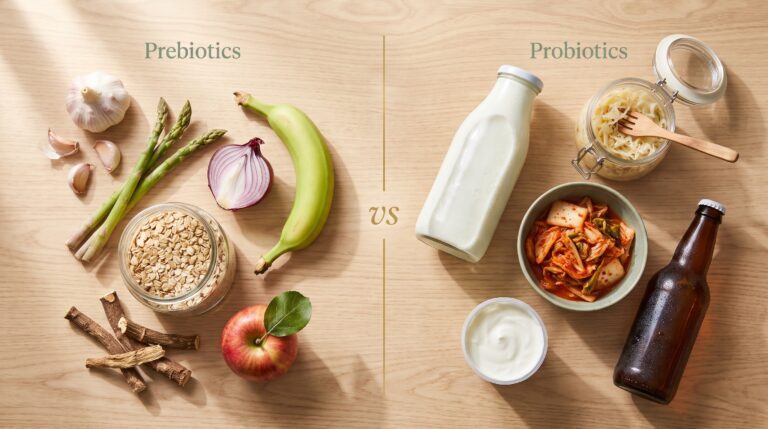
Probiotics introduce beneficial bacteria. Prebiotics feed and sustain them. Both are necessary — and most people focus entirely on the first while ignoring the second.
Prebiotic fibers are specific types of dietary fiber that beneficial gut bacteria ferment for energy. When they ferment prebiotics, they produce short-chain fatty acids (SCFAs) — particularly butyrate, propionate, and acetate — that have profound effects throughout the body: reducing gut inflammation, fueling gut lining cells, regulating blood sugar, and supporting immune function.
The best prebiotic food sources:
Garlic and onions are among the richest prebiotic sources available — specifically inulin and fructooligosaccharides (FOS). Even small amounts (one clove of garlic, a quarter onion) provide meaningful prebiotic activity.
Leeks and asparagus are excellent leek sources and work well as side dishes or additions to soups and stir-fries.
Green (unripe) bananas are significantly higher in prebiotic resistant starch than ripe bananas. As bananas ripen, the resistant starch converts to simple sugars — the greener, the more prebiotic benefit.
Oats contain beta-glucan, one of the best-studied prebiotic fibers, with strong evidence for increasing Bifidobacterium populations and reducing inflammatory markers.
Jerusalem artichokes are the most concentrated food source of inulin available — but introduce them gradually, as their prebiotic potency can cause gas in sensitive individuals.
Chicory root is the source of much of the inulin added to processed foods (labeled as “chicory root fiber” or “inulin”) and is available as a coffee substitute.
Practical approach: If high-FODMAP sensitivity is an issue for you (onions, garlic, and asparagus are high-FODMAP), start with oats and green bananas — both are lower-FODMAP prebiotic options that are well-tolerated by most people.
5. Reduce Ultra-Processed Foods Aggressively
This step doesn’t require adding anything. It requires removing something — and the research suggests it may be the highest-leverage change many people can make.
Ultra-processed foods — those engineered with emulsifiers, artificial sweeteners, refined seed oils, preservatives, and flavor enhancers — cause measurable damage to the gut microbiome through several mechanisms.
Emulsifiers (polysorbate 80, carboxymethylcellulose, carrageenan) directly disrupt the protective mucus layer that coats the gut lining. A landmark 2015 study in Nature found that common dietary emulsifiers significantly increased intestinal permeability, promoted inflammation, and altered microbiome composition toward more pro-inflammatory species — effects consistent with the development of inflammatory bowel disease and metabolic syndrome.
Artificial sweeteners (sucralose, saccharin, aspartame) have been shown to alter gut microbiome composition in ways that paradoxically worsen glucose tolerance and metabolic function — the opposite of what people using them for weight management intend.
Refined seed oils (canola, soybean, corn oil) high in omega-6 fatty acids promote an inflammatory microbiome environment when consumed in excess relative to omega-3s.
Refined sugar and flour rapidly ferment in the colon, selectively feeding harmful bacterial strains while starving the beneficial ones that require complex fiber.
The practical definition of ultra-processed foods: anything made in a factory with ingredients you wouldn’t find in a home kitchen. Packaged snacks, fast food, most breakfast cereals, flavored yogurts, energy drinks, most deli meats, instant noodles.
Practical approach: You don’t need to eliminate everything overnight. The research suggests that even reducing ultra-processed food intake by 30–40% produces measurable microbiome improvements within two weeks. Focus first on removing the foods you eat most frequently.
6. Manage Stress as a Gut Health Intervention
If you’re doing everything else right — eating well, taking probiotics, sleeping adequately — and your gut still isn’t improving, chronic stress may be the missing variable.
The gut-brain axis is bidirectional and deeply sensitive to psychological stress. Under chronic stress, cortisol and other stress hormones directly alter gut microbiome composition, reduce mucus production, loosen tight junctions (contributing to leaky gut), slow gut motility, and suppress the immune cells that maintain gut lining integrity.
Research from Psychosomatic Medicine found that psychological stress was independently associated with reduced microbial diversity and increased populations of potentially harmful bacteria — effects that were measurable even when diet was controlled.
The most evidence-supported stress management interventions for gut health specifically:
Diaphragmatic breathing (deep belly breathing) activates the parasympathetic nervous system — the “rest and digest” mode that your gut needs to function optimally. Even 5–10 minutes daily has been shown to reduce gut hypersensitivity and improve motility.
Regular moderate exercise is one of the most potent microbiome interventions available. A 2019 review in the British Journal of Sports Medicine found that exercise — independent of diet — significantly increased the abundance of beneficial bacteria, particularly butyrate-producing species. Aim for 150 minutes of moderate activity per week.
Sleep consistency (more on this below) is as much a stress management tool as a sleep intervention — irregular sleep dramatically elevates cortisol.
Nature exposure — even brief periods outdoors — has measurable effects on both stress hormones and microbiome diversity through exposure to environmental microbial diversity.
If you’re already experiencing gut-brain axis disruption, read: What Is Leaky Gut Syndrome? Symptoms, Causes and How to Heal
7. Prioritize Sleep Quality and Consistency
Your gut microbiome follows a circadian rhythm — a 24-hour biological clock that regulates which bacterial species are most active at which times of day, how gut motility varies throughout the day, and how the gut lining repairs itself overnight.
When your sleep is disrupted — whether by insufficient hours, irregular timing, or poor quality — this circadian rhythm is disrupted too. The consequences for your microbiome are measurable and rapid.
A 2019 study published in the journal Sleep found that even two nights of sleep restriction (to six hours) measurably reduced the abundance of beneficial Lactobacillus and Bifidobacterium species and increased markers of gut inflammation. The effects were partially reversible with recovery sleep — but not fully, suggesting that chronic sleep debt creates cumulative microbiome damage.
Conversely, consistent, sufficient sleep actively supports microbiome repair. The gut lining replaces itself every 3–5 days — a process that requires both adequate sleep and adequate nutrition to proceed efficiently.
For microbiome optimization specifically, the research points to two factors as most important:
Consistency of sleep timing matters as much as duration. Going to sleep and waking at the same time every day — including weekends — maintains your gut’s circadian rhythm even if total hours vary slightly.
Sleep duration of 7–9 hours provides the overnight repair window that the gut lining needs. Six hours is insufficient for most adults.
Practical approach: If you’re struggling with sleep quality, start with consistency of timing — same bedtime and wake time every day for two weeks — before addressing other sleep hygiene factors. Consistency alone produces measurable improvements in gut microbiome markers.
How Long Until You See Results?
This is the most common question — and the answer depends on what you’re measuring.
Microbial diversity changes can be detected within 3–5 days of significant dietary change. This is how fast the microbiome responds to new inputs.
Symptom improvement (reduced bloating, better energy, improved digestion) typically becomes noticeable within 2–4 weeks of consistent implementation.
Stable, sustained microbiome improvement — the kind that persists and continues to develop — takes 3–6 months of consistent dietary and lifestyle change.
The pattern most people experience: noticeable improvements in digestion and energy within the first month, with more subtle but significant changes in immunity, mood, skin, and cognitive clarity emerging over the following months.
Gut health changes are cumulative. The most important thing is consistency, not perfection.
What to Avoid While Improving Your Microbiome
The methods above build a healthier microbiome. These common habits actively undermine that work:
Unnecessary antibiotics — always ask your doctor if antibiotics are truly necessary, and if they are, follow with at least 4 weeks of intensive probiotic supplementation and fermented foods to rebuild.
Chronic NSAID use — ibuprofen and aspirin taken regularly measurably damage the gut lining and increase intestinal permeability. Discuss alternatives with your doctor if you rely on them regularly.
Excessive alcohol — even moderate intake disrupts gut bacteria composition and gut barrier integrity. The research suggests limiting to one drink daily or fewer for meaningful gut health benefits.
Skipping meals erratically — irregular eating patterns disrupt gut motility and microbial circadian rhythms. Consistent meal timing supports microbiome stability.
The Bottom Line
Improving your gut microbiome naturally comes down to a consistent set of inputs: more diverse plant foods, fermented foods daily, prebiotic fiber, quality probiotic supplementation when needed, less ultra-processed food, managed stress, and sufficient sleep.
None of these changes are dramatic. None require expensive programs or extreme protocols. What they require is consistency — applied over weeks and months, not days.
The microbiome is remarkably responsive. Most people who implement even three or four of these changes consistently notice meaningful differences within 30 days.
Start where you are. Add one change at a time. Track what you notice.
💊 Editor’s Pick: Best Probiotic for Gut Health — Will Silva’s top pick on Amazon
→ Also read: 10 Signs You Have an Unhealthy Gut (And How to Fix It)
→ Also read: What Is Leaky Gut Syndrome? Symptoms, Causes and How to Heal
Frequently Asked Questions
Q: How quickly can you improve your gut microbiome? A: Measurable changes in gut microbiome composition can occur within 3–5 days of dietary change. Noticeable symptom improvement typically appears within 2–4 weeks, with significant sustained improvement developing over 3–6 months of consistent habits.
Q: What is the fastest way to restore gut bacteria after antibiotics? A: The most effective approach combines high-dose multi-strain probiotic supplementation, daily fermented foods (especially kefir and yogurt with live cultures), and increased prebiotic fiber — started immediately after completing the antibiotic course and continued for at least 4 weeks.
Q: Do probiotics actually work for gut health? A: Yes — but strain specificity matters significantly. Probiotics with published clinical evidence for specific strains (particularly Lactobacillus rhamnosus GG and Bifidobacterium longum) have strong evidence for improving gut microbiome composition and reducing symptoms like bloating, gas, and irregular bowel movements.
Q: Can stress really damage your gut microbiome? A: Yes. Chronic psychological stress measurably reduces microbial diversity, loosens gut tight junctions, slows motility, and increases populations of pro-inflammatory bacteria — independent of dietary factors. Managing stress is as important as dietary changes for gut health.
Q: What foods damage the gut microbiome most? A: Ultra-processed foods containing emulsifiers (polysorbate 80, carrageenan), artificial sweeteners, refined seed oils, and refined sugar cause the most consistent microbiome damage. Regular alcohol consumption and unnecessary antibiotic use are also significant.
Q: Is 30 plant foods a week realistic for most people? A: Yes. Most people eating a reasonably varied diet are already consuming 15–20 plant foods weekly without realizing it. Getting to 30 typically means adding more variety — different vegetables, rotating grains, adding nuts and seeds — rather than eating significantly more food.
References & Further Reading
- Sonnenburg JL & Bäckhed F. “Diet–microbiota interactions as moderators of human metabolism.” Nature, 2016.
- Wastyk HC, et al. “Gut-microbiota-targeted diets modulate human immune status.” Cell, 2021. (Stanford fermented food study)
- McDonald D, et al. “American Gut: an Open Platform for Citizen Science Microbiome Research.” mSystems, 2018.
- Chassaing B, et al. “Dietary emulsifiers impact the mouse gut microbiota promoting colitis and metabolic syndrome.” Nature, 2015.
- Monda V, et al. “Exercise Modifies the Gut Microbiota with Positive Health Effects.” Oxidative Medicine and Cellular Longevity, 2017.
- Smith RP, et al. “Gut microbiome diversity is associated with sleep physiology in humans.” PLOS ONE, 2019.
This article is for informational purposes only and does not constitute medical advice. Always consult a qualified healthcare professional for personal health concerns.



6 Comments